
If you've spent any time exploring options trading, you've likely come across the term "long straddle." It sounds technical, but the concept behind it is fairly intuitive once you break it down. This strategy is built for a very specific situation: when you expect a stock to move significantly, but you're not sure which direction it will go.
In this blog, we'll explain what a long straddle is, how it works, when traders typically use it, and what risks and costs come with it. Whether you're new to share market investment or already have some experience with stock market instruments, this guide will help you understand the mechanics clearly.
What Is a Long Straddle?
A long straddle is an options trading strategy where an investor simultaneously buys a call option and a put option on the same underlying stock, with the same strike price and the same expiration date.
A call option gives the buyer the right (not the obligation) to buy the stock at the strike price.
A put option gives the buyer the right (not the obligation) to sell the stock at the strike price.
By holding both at once, the investor profits if the stock price moves sharply in either direction, up or down, by more than the combined cost of the two options (called the premium).
In simple terms, a long straddle is a bet on volatility, not on direction.
Why Do Traders Use a Long Straddle?
Most investment strategies require you to predict whether a stock will rise or fall. A long straddle removes that requirement. Instead, it asks a different question: "Will this stock move a lot, regardless of direction?"
This makes it useful around events where a big price swing is expected, but the outcome is uncertain, such as:
- Quarterly earnings announcements
- Major regulatory or policy decisions
- Mergers, acquisitions, or corporate restructuring news
- Macroeconomic announcements (like interest rate decisions)
If the stock reacts strongly in either direction after such an event, the long straddle can become profitable.
How a Long Straddle Works: A Simple Example
Let's say a stock is currently trading at ₹500. An investor expects high volatility around an upcoming earnings report but isn't sure if the news will be positive or negative.
The investor buys:
- One call option at a strike price of ₹500
- One put option at a strike price of ₹500
- Both options expire on the same date
Suppose the call costs ₹15 and the put costs ₹15. The total cost (premium) for this straddle is ₹30.
Scenario 1: Stock rises to ₹560
The call option becomes worth ₹60 (intrinsic value), while the put expires worthless. After subtracting your total upfront cost of ₹30, your net profit is ₹30.
Scenario 2: Stock falls to ₹440
The put option becomes valuable since the stock is ₹60 below the strike price. Again, after subtracting the ₹30 premium, there's a profit.
Scenario 3: Stock stays near ₹500
Neither option gains much value, and the investor loses the ₹30 premium paid, which is the maximum possible loss in this strategy.
This example shows the core idea: profit depends on the size of the price movement, not its direction.
Key Characteristics of a Long Straddle
1. Limited and known risk:
The maximum loss is limited to the total premium paid for both options. This makes risk easier to calculate upfront, compared to strategies involving unlimited downside.
2. Unlimited profit potential on the upside:
If the stock price rises significantly, profit potential is theoretically unlimited, since stock prices can keep climbing.
3. Substantial profit potential on the downside:
If the stock falls, profit is capped only by the stock price reaching zero, which still allows for large gains.
4. Breakeven points:
A long straddle has two breakeven points:
Upper breakeven = Strike price + total premium paid
Lower breakeven = Strike price − total premium paid
The stock needs to move beyond either of these points for the strategy to turn profitable.
5. Time decay works against you:
Options lose value as expiration approaches, a phenomenon known as time decay (or "theta decay"). Since a long straddle involves buying two options, it is more sensitive to time decay than single-option strategies. If the stock doesn't move enough before expiry, the position can lose value even without any directional movement.
When Is a Long Straddle Most Effective?
A long straddle tends to work best when:
- Implied volatility is currently low (making options cheaper to buy), but is expected to rise
- There's a clear, scheduled event likely to cause a sharp price reaction
- The investor has no strong directional view but expects a big move
Conversely, this strategy is less effective when the stock is expected to trade within a narrow range, since the premium paid can outweigh any small gains.
Risks to Keep in Mind
While the maximum loss is limited to the premium paid, that doesn't mean the strategy is low-risk. A few important points to consider:
- Premium costs add up. Since you're buying two options instead of one, the total premium can be relatively high, which raises the breakeven threshold.
- Volatility doesn't always materialize. Sometimes, despite expectations, a stock doesn't move enough to cover the premium cost.
- Implied volatility crush. After an anticipated event (like earnings), implied volatility often drops sharply, reducing the value of both options even if the stock moves somewhat.
This is why a long straddle is generally considered a strategy for investors who already understand options mechanics and risk management, rather than absolute beginners exploring stock market investment for the first time.
Long Straddle vs. Other Options Strategies
It's helpful to see how a long straddle compares to similar strategies:
| Strategy | Directional View Needed? | Cost | Risk |
| Long Straddle | No | High (two premiums) | Limited to premium paid |
| Long Strangle | No | Lower than straddle | Limited, but needs a bigger move to profit |
| Long Call | Yes (bullish) | Lower (one premium) | Limited to premium paid |
| Long Put | Yes (bearish) | Lower (one premium) | Limited to premium paid |
A long strangle is often compared to a long straddle since both bet on volatility. The key difference is that a strangle uses different strike prices for the call and put, usually making it cheaper but requiring a larger price move to become profitable.
How to Get Started?
If you're considering options strategies like the long straddle as part of your broader investment in share market activities, a few starting points can help:
- Build a foundation first: Understand how calls, puts, premiums, and strike prices work before attempting combined strategies.
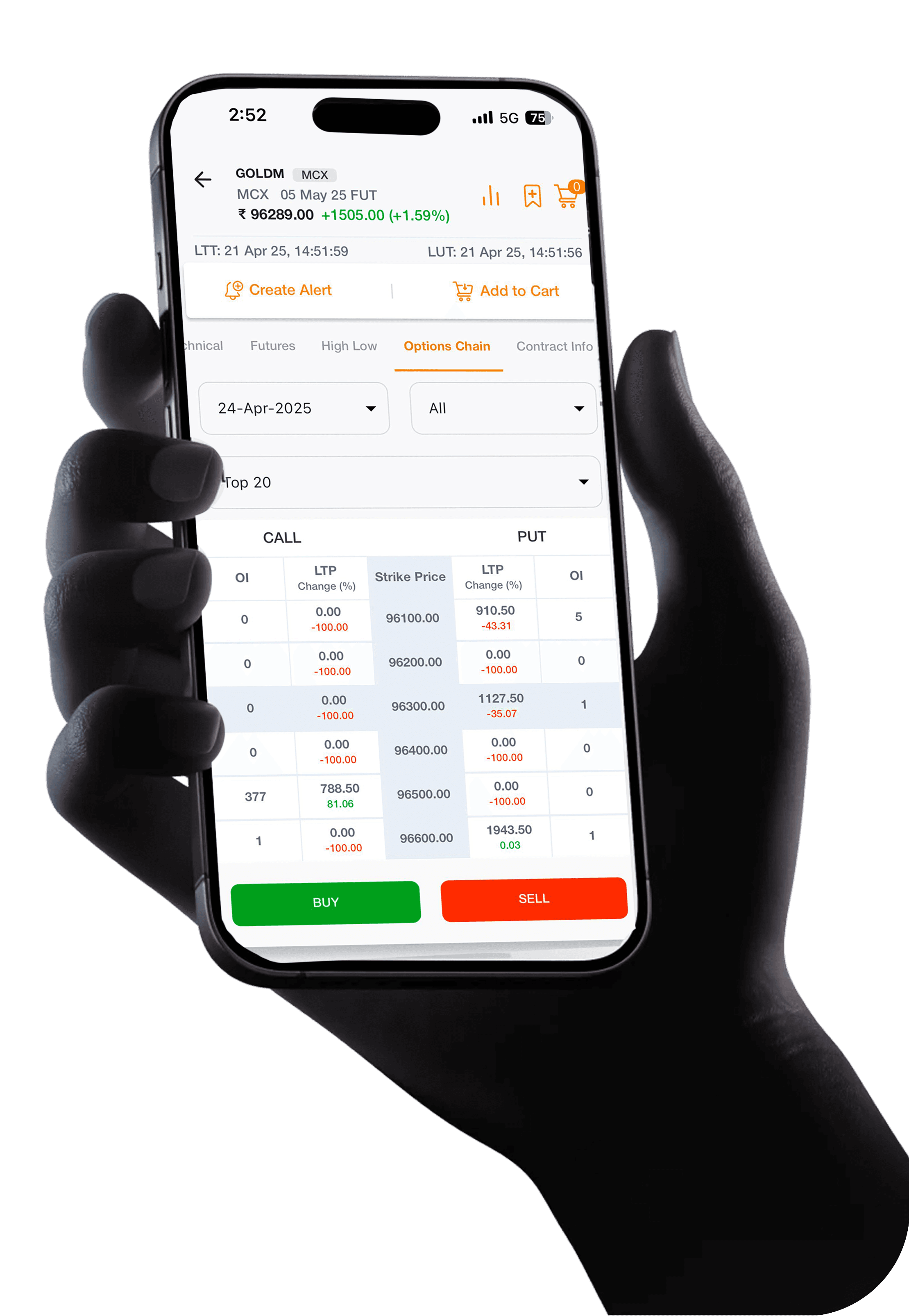
- Use a reliable share market app: Most modern trading platforms offer options-chain views, payoff calculators, and volatility data that can help you analyze potential straddle setups before committing capital.
- Practice with paper trading: Many platforms allow simulated trading, which is a useful way to understand payoff structures without financial risk.
- Track implied volatility: Since this strategy depends heavily on volatility expectations, learning to read volatility indicators is essential.
- Start small: Options strategies, even those with defined risk, can be complex. Starting with smaller positions helps you learn the mechanics with manageable exposure.
Final Thoughts
A long straddle is a strategy designed for uncertainty; it lets investors potentially profit from a significant price move without needing to predict its direction. This makes it a useful tool around high-impact events like earnings or major announcements. That said, it comes with real costs and risks, particularly around time decay and the volatility levels priced into the options.
As with any approach to stock market participation, it's important to understand the mechanics fully, assess your own risk tolerance, and ideally consult a qualified financial advisor before using derivatives strategies like this with real capital.