
Love Futures & Options?
Whatever your investing style, we have a solution for you!
- Competitive
Rates
- Award-Winning*
Research
- Advanced
Derivatives Tools

Why Anand Rathi for Derivatives?
Simple and intuitive derivative trading backed by expertise
Competitive Brokerage Rates
Some of the most competitive market rates in our Value Added Scheme (VAS) to minimize trading costs
Seamless Trading Platforms
State-of-the-art digital platforms and TradeMobi app offering rapid order execution, live market data, and more
Expert Research & Analysis
Timely reports across our platforms and via Telegram for informed decision-making on the go


Personalized Research
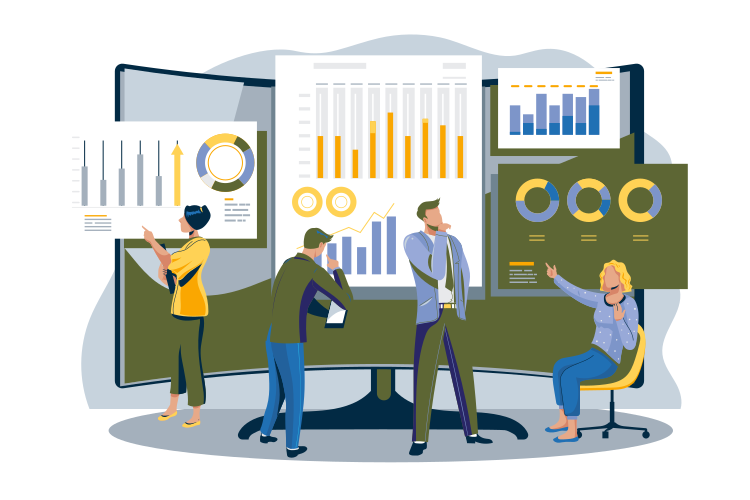
Market Reports
Regular, in-depth reports on market trends, economic indicators, and specific derivative instruments
Market Reports
Regular, in-depth reports on market trends, economic indicators, and specific derivative instruments
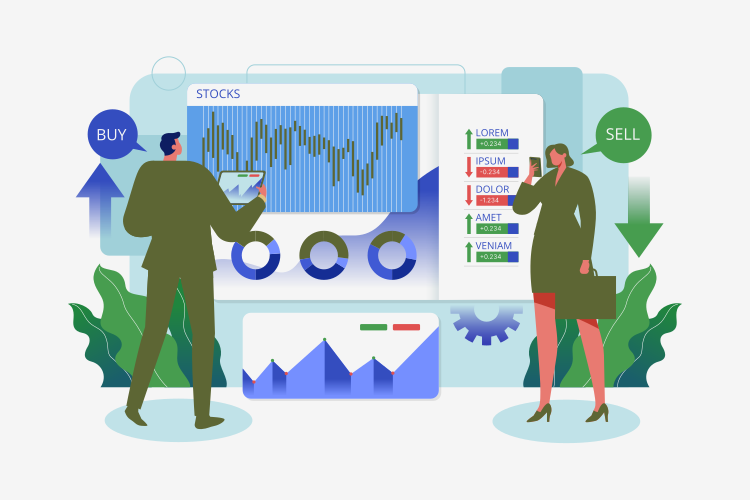
Advanced Trading Tools
Cutting-edge trade execution platforms and real-time analytics for quick and effective trading

Educational Webinars
Exclusive webinars led by our market experts around derivative basics as well as advanced trading strategies
Download TradeMobi App
- Real-Time Market Data
- Advanced Trading Tools
- Expert-Backed Research


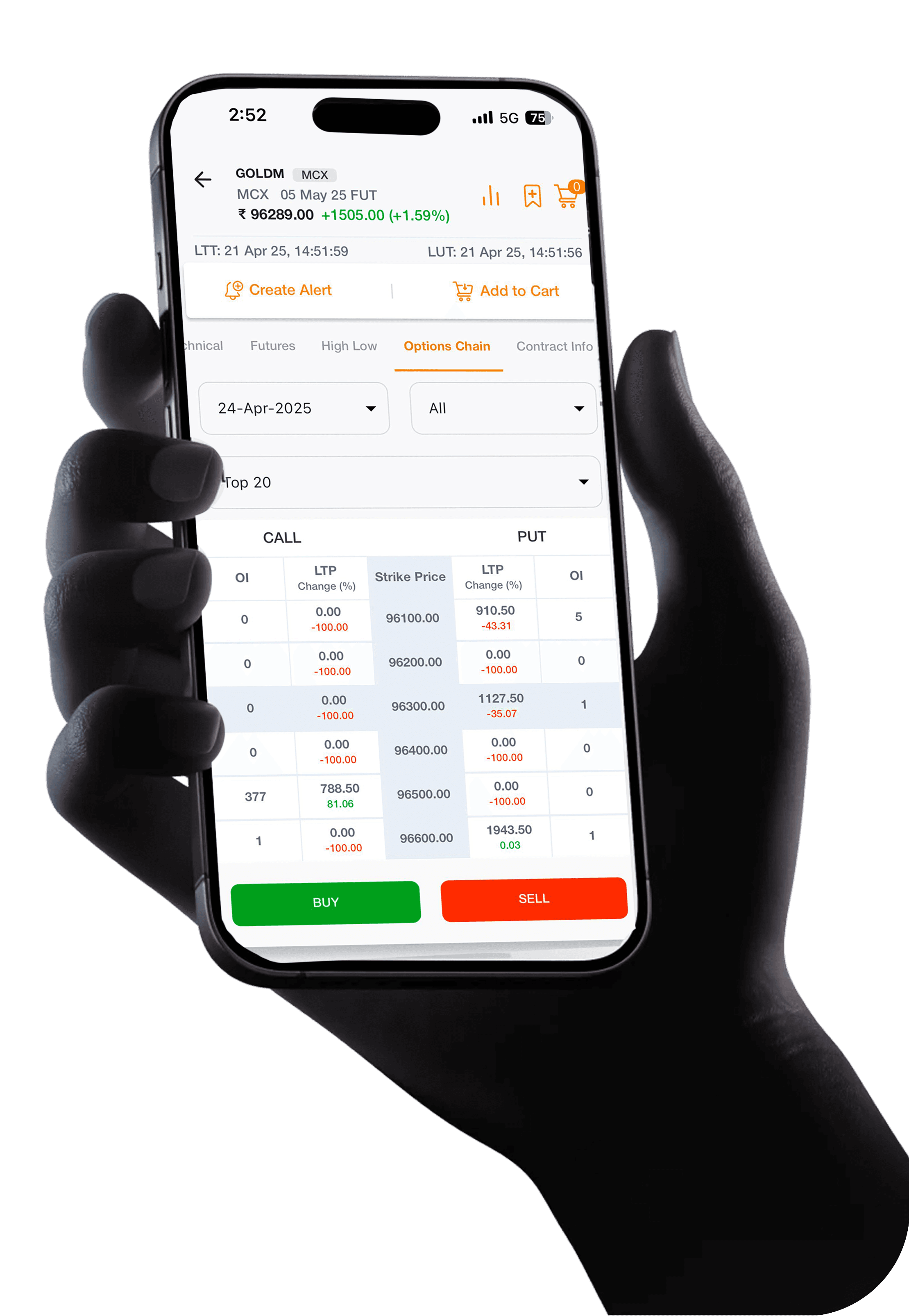

Advanced Tools & Calculators
Cutting-edge technology to match the pace of the derivative markets



All about Derivatives
Derivatives are financial contracts that derive their value from an underlying asset. They are commonly linked to investing in commodities , stocks, currencies, and even indices. They offer leverage like heightened market exposure, hedging opportunities, and even growth opportunities irrespective of market direction.
Know Your Derivatives
- Futures: Contracts to buy or sell an asset at a predetermined price on a specified future date
- Options: Contracts that let you to buy or sell an asset at a specific price before a predetermined date without any obligation, offering flexibility of choice
Why Derivatives?
Derivatives go beyond traditional asset classes as potentially valuable trading tools and hedges for a well-balanced portfolio.

Lean on Leverage
Amplify potential gains on market movements and enjoy a more flexible portfolio.

Lean on Leverage
Amplify potential gains on market movements and enjoy a more flexible portfolio.
Hedge Against Risk
Offset risks associated with fluctuations in stock prices, commodities, or currencies.
Diversify Your Portfolio
Maintain a stable portfolio even in market volatility with non-traditional derivatives that move independently of other investments.
How to Start Derivative Trading?
Here's a step-by-step guide to start your derivative trading journey with Anand Rathi:
1.
Open a Derivatives Trading Account
2.
Complete KYC
3.
Choose Your Brokerage Plan
4.
Meet Margin Requirements
5.
Access The Trading Platform
6.
Begin Trading
Derivatives FAQs
Your Questions, Answered
- Derivatives are financial contracts that derive their value from an underlying asset. They are usually used by traders for hedging risks, taking leveraged positions with limited exposure to the underlying asset, and diversifying portfolios.
- Unlike stocks, derivatives do not represent ownership in a company but are contracts tied to the price of an underlying asset. Derivatives can also be more complex due to leverage and margin requirements, requiring a solid understanding of market dynamics.
- Open a derivatives trading account with us by completing the KYC process and meeting margin requirements. Once set up, you can choose a brokerage plan and start trading on our platform with access to expert insights and research tools.
- Derivatives are leveraged instruments, allowing traders to control a larger position size with a small capital deployment. While this can be beneficial when profits are made, losses can potentially be unlimited if stop losses or risk-defined strategies are not used.
- Yes, Anand Rathi offers a range of tools, including options strategy builders and futures price calculators, to support your decision-making and optimize your strategies.
- In derivatives trading, a margin is the initial amount you need to deposit to open a position. It is effectively a form of security for both the investor and broker, and help manage risk in case the price fluctuates significantly. Margins can vary depending on the type of derivative and the level of leverage used.
- Yes. The marginal amount required for derivative trading is only part of the actual value of the underlying position. It is possible for losses to exceed your initial margin if the market moves significantly against your position. In such scenarios, the broker issues a margin call, requiring you to add additional funds to maintain the position.
To trade derivatives safely, keep these points in mind:
- Understand the product and the underlying asset.
- Use leverage carefully and avoid overextending your capital.
- Set clear stop-loss limits to protect against unexpected losses.
- Stay informed of market trends and consult expert advice when needed.
- Hedging with derivatives helps offset potential losses in your main portfolio. For example, if you hold stocks of a certain company and are worried about a decline in prices in the near term, you can buy put options to 'hedge' your stock position. If you are right, the profit on the put option can offset the loss of on the portfolio, and if the stock moves up instead, the portfolio profit can make up for loss incurred in the put option.
- A stop-loss order is a risk management tool that automatically closes your position if the asset's price reaches a specific level, limiting potential losses. This tool is especially useful in financial derivatives, where market movements can runaway losses if unchecked.
- Yes, you can. However, you must monitor the position as the expiration date approaches. Some contracts are automatically settled, while others may require you to take delivery of the underlying asset if the position is 'in the money' (ITM).
- In India, profits from Futures and Options (F&O) trading is considered non-speculative business income. This income will be taxed based on your applicable tax slab. Trading also involves other taxes such as Securities Transaction Tax (STT), which is directly deducted by the broker when orders are executed.