AnandRathi

How Does the Stock Market Work? - A Complete Guide

The stock market often seems complicated, filled with charts, numbers, and constant price movements. This confusion stops many people from taking their first step toward share market investment.

But here’s the truth: once you understand how the stock market works, it becomes one of the most effective ways to grow your money over time.

In this guide, we'll explain how does the stock market work in India, how share prices are determined, and how you can start investing confidently. So keep scrolling!

Stock Market Meaning 

The stock market is a place or platform where publicly traded companies’ shares (also known as stocks or equities) are bought and sold. 

When a company wants to raise funds to increase its business, it may do so by issuing shares to the general public. The people who buy these shares become the shareholders of the company.

In India, stock trading primarily happens on two major exchanges:

  • National Stock Exchange (NSE)
  • Bombay Stock Exchange (BSE)

These exchanges facilitate a transparent and regulated process for buying and selling securities, thereby providing an opportunity for millions of investors to invest in the share market.

How Does the Stock Market Work in India?

The mechanism of the Indian stock market can be a complex concept for individuals who are new to investing. However, the process is actually quite structured and regulated.

Let's understand how does the stock market work in India through step by step process -

1. Companies Raise Money Through IPOs:

The process begins when a company decides to raise capital for growth, expansion, or debt repayment. It does this by launching an Initial Public Offering (IPO) in the primary market.

In an IPO, the company offers its shares to the public for the first time. By applying in one, investors can become direct shareholders of the company.  

2. Listing on Stock Exchanges:

After the IPO, the company’s shares are listed on major stock exchanges in India:

  • National Stock Exchange (NSE)
  • Bombay Stock Exchange (BSE)

These exchanges act as marketplaces where buying and selling of shares happen.

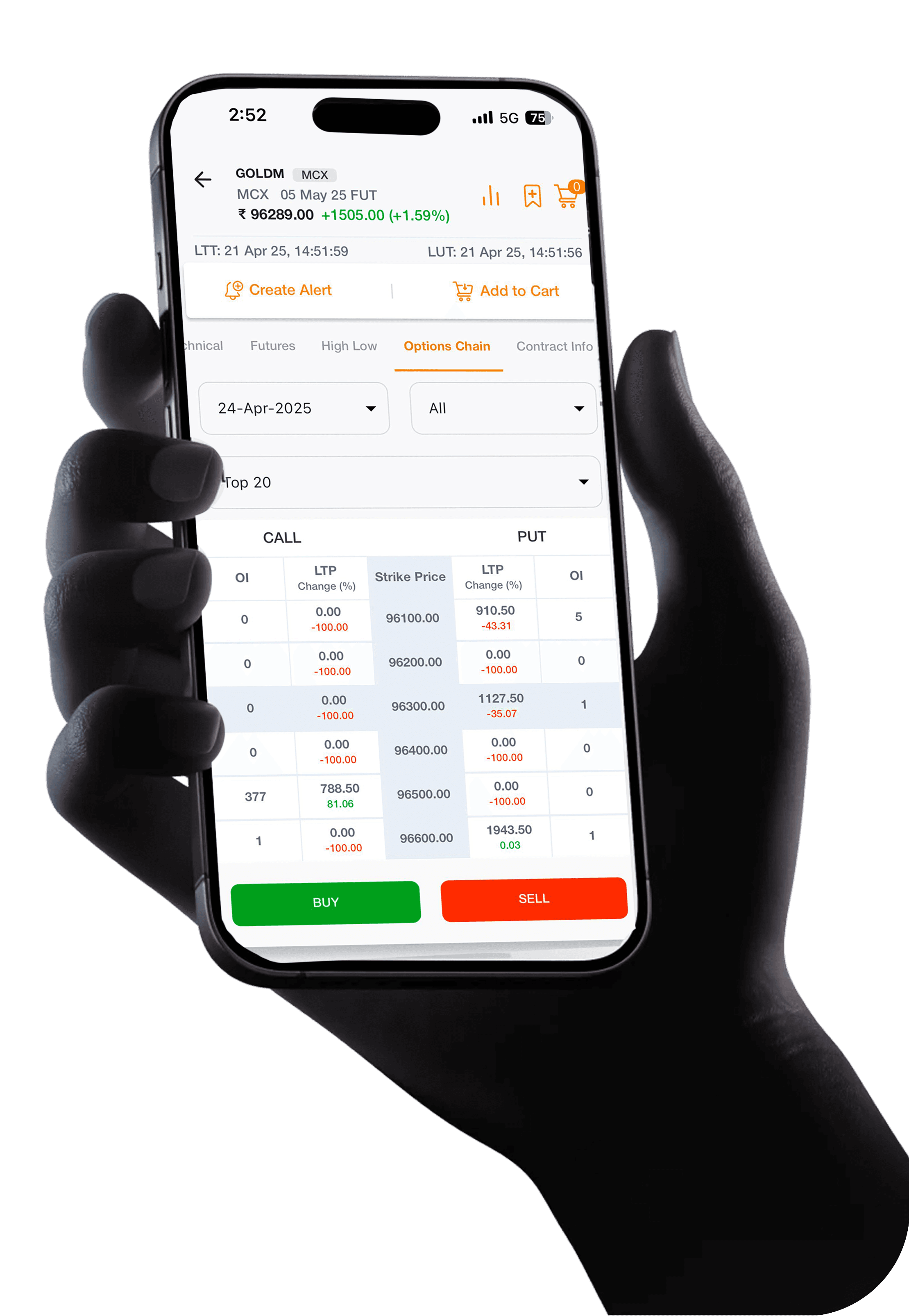
3. Investors Use Brokers or Apps to Trade:

Once the shares or equities are listed on the exchanges, investors can start trading them. However, shares cannot be bought or sold directly from the exchange. To do so, investors will be required to find a reliable stockbroker as a depository participant. 

To start trading in stocks, investors will be provided with a trading or share market app. Using this platform, they'll be required to:

  • Search, review, and analyze the stocks they want to trade in
  • Place buy/sell orders by including price and quantity

Through these trading platforms, transactions are executed digitally within seconds.

4. Order Matching System:

Once the order is placed, the stock exchange uses an automated system to match buyers and sellers. 

If investors place a buy order, their buying price is matched with someone's selling price, and the trade is executed. And conversely, if a sell order is placed, the selling price is matched with someone's buying price, and the trade is executed. This process happens in real-time.

5. Trade Execution & Settlement:

After the order is matched, the trade is considered successful. 

If shares are purchased, they will be credited to the investor's demat account, and money will be debited from their trading account. 

If shares are sold, they will be debited from the investor's demat account, and money will be credited to the trading or bank account. 

Settlement typically happens within T+1 day (next trading day). 

Key Participants in the Stock Market

Here are the key participants in the stock market:

1. Investors and Traders: These are individuals or institutions that buy and sell shares in the market.

  • Retail Investors – Individuals investing their personal funds
  • Traders – Individuals looking for short-term gains by trading the market
  • Institutional Investors – Individuals investing large amounts of money

Their buying and selling decisions drive market activity and price movements.


2. Stock Exchanges: A stock exchange refers to a market where securities are traded. In the case of India, the two main exchanges are:

  1. National Stock Exchange
  2. Bombay Stock Exchange

Their major roles include matching buy and sell orders, ensuring fair pricing through transparency, and providing a regulated trading environment.


3. Depositories: Depositories hold investors’ shares in electronic (Demat) form. The two main depositories in India are:

  1. National Securities Depository Limited
  2. Central Depository Services Limited

Function of depositories include providing safe storage for securities, quick transfer of shares, etc. 


4. Depository Participants: Depository Participants act as a link between investors and depositories.

  • Banks and stockbrokers usually act as DPs
  • They help open and maintain Demat accounts
  • Facilitate holding and transfer of securities


5. Market Regulator (SEBI): The entire stock market is governed by the Securities Exchange Board of India (SEBI). 

The key responsibilities of SEBI are: investor protection, regulation of brokers and stock exchanges, prevention of fraud, insider trading, and manipulation, and compliance with the rules and regulations.


How Are Share Prices Determined?

It is important to understand the factors that influence share prices. The fundamental determinant of a stock price is demand and supply. However, a number of factors influence this. 

Now, let us break it down simply and practically.

1. Demand and Supply (Primary Factor):

The most important factor behind share price movement is demand and supply:

  • If the number of buyers of a stock is higher compared to the number of sellers of the same stock, then the price rises.
  • When the number of people willing to sell a stock is higher compared to the number of people willing to buy it, then the price of the stock falls.

This constant interplay between buyers and sellers of stocks happens in real time.

2. Company Performance:

A company’s financial health has a direct impact on its share price. Some of the key performance indicators for the company are as follows:

  • Revenue growth
  • Profit margins
  • Earnings per share (EPS)
  • Future growth potential

Good performance always leads to increased investor confidence, which in turn leads to increased demand.

3. Economic Conditions:

Macroeconomic factors also play a major role:

  • Interest rates
  • Inflation
  • GDP growth
  • Government policies

For example, lower interest rates often encourage more investment in the share market, pushing prices higher.

4. Industry and Sector Trends:

Sometimes, entire sectors move together. Positive news in a sector (e.g., IT, banking) can boost stock prices. Regulatory changes or disruptions can negatively impact the sector. 

5. News and Global Events:

Stock prices react immediately to news and events such as:

  • Company announcements (mergers, earnings, management changes, etc.)
  • Announcements regarding budgets and policies, etc.
  • Global events (wars, pandemics, financial crises, etc.)

Even rumors or expectations can influence short-term price movements.

6. Investor Sentiment:

Market psychology plays a powerful role:

  • Optimism (Bullish sentiment) → Prices rise
  • Fear (Bearish sentiment) → Prices fall

Sometimes, prices move more due to emotions than actual fundamentals.

7. Institutional Activity:

Large investors like mutual funds and foreign institutional investors (FIIs) can significantly impact prices.

Large buying → pushes prices up

Large selling → pulls prices down

8. Liquidity of the Stock:

Liquidity means how easily a stock can be bought or sold.

Highly liquid stocks → stable price movements

Low liquidity stocks → higher volatility

How to Start Investing in the Share Market?

It is easy to start your journey in investing in the share market, provided you follow the right steps, which are as follows:

Step 1: Open a Demat & Trading Account:

Having a Demat and trading account is an important requirement for investing in the share market. 


Step 2: Complete KYC:

The required documents like PAN, Aadhaar, and bank details need to be submitted to complete the KYC.

Step 3: Add Funds:

Transfer money from your bank account to your trading account.

Step 4: Research Before Investing:

Analyze:

  • Company fundamentals
  • Financial statements

    Industry outlook

Step 5: Place Order:

Place your buy order by inputting the quantity and price at which you want to purchase. 

Step 6: Start Small:

Invest a low amount and increase your investments over time.

Step 7: Diversify Your Portfolio:

Do not invest all your money in a particular stock or industry.

Step 8: Monitor and Review:

Monitor your investments and make any necessary adjustments to the portfolio.

Common Mistakes to Avoid

Avoiding mistakes is just as important as making the right investments in the share market:

  • Investing without knowledge
  • Following tips or rumors blindly
  • Overtrading
  • Ignoring diversification
  • Trying to time the market perfectly
  • Letting fear or greed control decisions
  • Not having a clear investment goal

Frequently Asked Questions

How does the stock market work in India?

India's stock market enables investors to buy and sell stocks in publicly traded companies through the National Stock Exchange and the Bombay Stock Exchange. The process of buying and selling stocks in India takes place electronically, with a T+1 settlement cycle, and the process is overseen by the Securities Exchange Board of India.

What is the minimum amount required to start investing?

There is no fixed minimum amount. You can start investment in the share market with the price of a single share, which can be as low as a few hundred rupees, depending on the company.

Is share market investment safe for beginners?

Investment in the stock exchange is risky, but beginners can make safe investments by investing small amounts, investing in diversified shares, and focusing on companies with strong fundamentals.

What is the difference between trading and investing?

Trading involves short-term buying and selling to earn quick profits.

Investing focuses on long-term wealth creation by holding stocks.

How are share prices decided?

Share prices are determined on the basis of demand and supply in the stock exchange, along with the performance of the companies, the economic conditions, etc.

Disclaimer

The information provided in this article is for educational and informational purposes only. Any financial figures, calculations, or projections shared are solely intended to illustrate concepts and should not be construed as investment advice. All scenarios mentioned are hypothetical and are used only for explanatory purposes. The content is based on information from credible, publicly available sources. We do not guarantee the completeness, accuracy, or reliability of the data presented. Any references to the performance of indices, stocks, or financial products are purely illustrative and do not represent actual or future results. Actual investor experience may vary. Investors are advised to carefully read the scheme/product offering information document before making any decisions. Readers are advised to consult with a certified financial advisor before making any investment decisions. Neither the author nor the publishing entity shall be held responsible for any loss or liability arising from the use of this information.

Download TradeMobi App

Real-Time Market Data
Advanced Trading Tools
Expert-Backed Research
Google Play
App Store
TradeMobi

Popular on Anand Rathi

Explore Sitemap

Anand Rathi Share and Stock Brokers Ltd.
SEBI Registration No.: INZ000170832 (BSE-949 | NSE-06769 | MSEI-1014 | MCX-56185 | NCDEX-1252), CDSL & NSDL: IN-DP-437-2019. *Research Analyst - INH000000834. PMS: INP000000282 is Registered under "Anand Rathi Advisors Limited" | MBD-INM000010478 is Registered under "Anand Rathi Advisors Limited"| NBFC is Registered under "Anand Rathi Global Finance Limited" Regn. No.: B-13.01682 | Insurance is Registered under "Anand Rathi Insurance Brokers Ltd." License No. 175. Insurance Corporate Agent: CA1048 (This registration shall be valid from 04-Jun-2025 to 03-Jun-2028).

Anand Rathi International Ventures (IFSC) Private Limited.
SEBI Registration No.: INZ000292939 (INDIA INX Member Code: TM - 5064 | NSE IX Member Code: TM -10048, IIBX Member Code: TM – 2011), IIDI DP ID 350071 AND Registration No.: IFSCA/DP/2022-23/007, IFSCA/CMI/Distributor/2023-24/0002. CIN No.: U65999GJ2016PTC094915. For any complaints email at Ifscgrievance@rathi.com. Regulator: International Financial Services Centres Authority (IFSCA)- https://www.ifsca.gov.in/

Disclaimer:

Equity: Investment in securities market are subject to market risks, read all the related documents carefully before investing.

The securities are quoted as an example and not as a recommendation.

Mutual Funds: Mutual Fund investments are subject to market risks, read all scheme related documents carefully before Investing. AMFI-Registered Mutual Fund Distributor: ARN-4478 (Initial Registration 4th Feb, 2003 & Valid From 2nd April, 2025 - 1st April, 2028) : Anand Rathi Share and Stock Brokers Ltd. | ARN-111569: Anand Rathi Wealth Limited | ARN-100284: AR Digital Wealth Private Limited.

IPO: Opening of account will not guarantee allotment of shares in IPO. Investors are requested to do their own due diligence before investing in any IPO.

*Third Party products: All third-party products like PMS, Mutual Funds, Fixed Income Products, IBS, Bonds, AIFs are not Exchange traded product and "ARSSBL" is just acting as distributor. All disputes with respect to the distribution activity, would not have access to Exchange investor redressal forum or Arbitration mechanism.

MTF: MTF is subject to the provisions of SEBI Cir. CIR/MRD/DP/54/2017 dt June 13, 2017 & terms and conditions mentioned in rights and obligations statement issued by the ARSSBL

Investment Baskets: Baskets are not Exchange traded product, all disputes with respect to this activity, would not have access to Exchange investor redressal forum or Arbitration mechanism.

Research Analyst: The views expressed in this website accurately reflect the personal views of the analyst(s) about the subject securities or issuers and no part of the compensation of the research analyst(s) was, is, or will be directly or indirectly related to the specific recommendations or views expressed by the research analyst(s). The advertisment are bound by stringent internal regulations and also legal and statutory requirements of the Securities and Exchange Board of India (hereinafter "SEBI").

Certification: Registration granted by SEBI and certification from NISM is in no way a guarantee of performance of the intermediary or provides any assurance of returns to investors.

*Award Winning Research: Anand Rathi Share and Stock Brokers Limited (Research Analyst) was awarded as "Best Equity Advisor" at World BFSI Congress & Awards 2022

*Client Data: Client data shown on this website is as on 31st March 2025

Trading View: Anand Rathi has partnered with TradingView for its charting technology. A global platform offering heatmaps, STOCK SCREENERS and market data.

By submitting this form, I hereby provide my explicit consent to be contacted by Anand Rathi Group and its associate companies via phone call, SMS, email, or WhatsApp for information related to products and services, even if I am registered on DND.

Attention Investors:

  • For all communication related to vulnerability reporting, security alerts, or any other suspicious activity related to cyber security, contact priyanksheth@rathi.com/+91-22-62811514"
  • For any complaints email at grievance@rathi.com, For DP related queries/complaints email at dp@rathi.com
  • For any Mutual Fund-related complaints, please email customersupport@rathi.com.
  • For further escalation, you may contact mf@rathi.com.
  • Filing of complaints on SCORES – Easy & quick a. Register on SCORES portal b. Mandatory details for filing complaints on SCORES: I. Name, PAN, Address, Mobile Number, Email ID c. Benefits: I. Effective communication ii. Speedy redressal of the grievances.
  • Stock Brokers can accept securities as margin from clients only by way of pledge in the depository system w.e.f. September 1, 2020.
  • Update your mobile number & email Id with your stock broker/depository participant and receive OTP directly from depository on your email id and/or mobile number to create pledge.
  • Pay 20% upfront margin of the transaction value to trade in cash market segment.
  • Investors may please refer to the Exchange's Frequently Asked Questions (FAQs) issued vide circular reference NSE/INSP/45191 dated July 31, 2020 and NSE/INSP/45534 and BSE vide notice no. 20200731-7 dated July 31, 2020 and 20200831-45 dated August 31, 2020 dated August 31, 2020 and other guidelines issued from time to time in this regard
  • Check your Securities /MF/ Bonds in the consolidated account statement issued by NSDL/CDSL every month.
Prevent Unauthorized Transactions in your demat account → Update your Mobile Number with your Depository Participant. Receive alerts on your Registered Mobile for all debit and other important transactions in your demat account directly from CDSL.No need to issue cheques by investors while subscribing to IPO. Just write the bank account number and sign in the application form to authorise your bank to make payment in case of allotment. No worries for refund as the money remains in investor's account.KYC is one time exercise while dealing in securities markets - once KYC is done through a SEBI registered intermediary (broker, DP, Mutual Fund etc.), you need not undergo the same process again when you approach another intermediary.Prevent Unauthorized Transactions in your demat account → Update your Mobile Number with your Depository Participant. Receive alerts on your Registered Mobile for all debit and other important transactions in your demat account directly from CDSL.No need to issue cheques by investors while subscribing to IPO. Just write the bank account number and sign in the application form to authorise your bank to make payment in case of allotment. No worries for refund as the money remains in investor's account.KYC is one time exercise while dealing in securities markets - once KYC is done through a SEBI registered intermediary (broker, DP, Mutual Fund etc.), you need not undergo the same process again when you approach another intermediary.