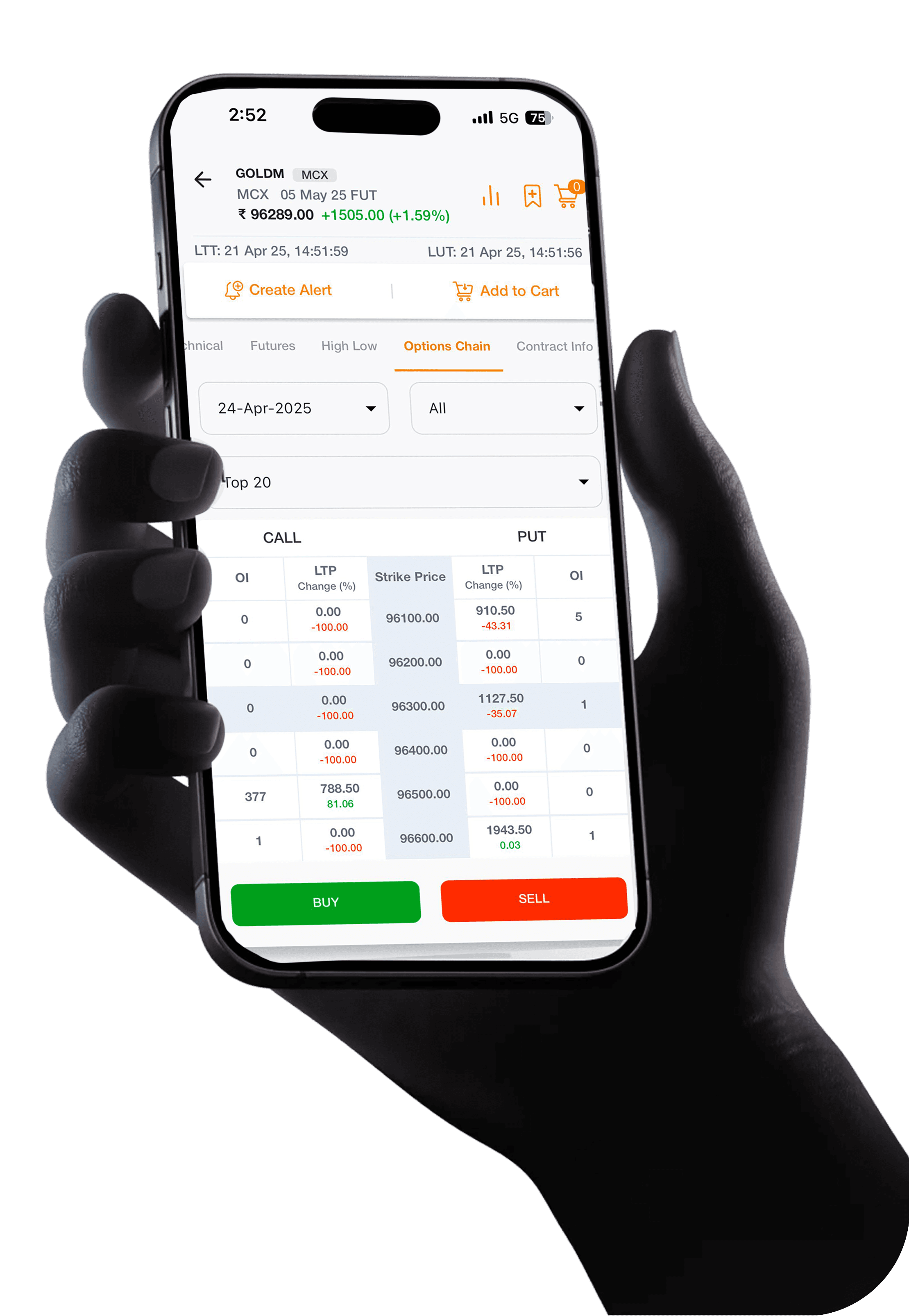

Open any trading or share market app during trading hours, and you'll see numbers flickering constantly, green one moment, red the next. For someone new to investing, this can feel confusing, even random. But stock prices don't move without reason. Every tick reflects real decisions being made by real people and institutions, all reacting to information, expectations, and changing circumstances.
Understanding why stock prices change is one of the most fundamental lessons in investment in the share market. It helps you make sense of market behaviour instead of reacting emotionally to every rise or fall, and it builds a stronger foundation for long-term decision-making.
This blog breaks down the core reasons behind price movements, both during market hours and after the market closes, and explains how these mechanics actually work.
The Basic Principle: Supply and Demand
At its core, a stock price is determined by supply and demand, just like any other market.
- When more people want to buy a stock than sell it, the price tends to rise, since buyers are willing to pay more to secure shares.
When more people want to sell a stock than buy it, the price tends to fall, as sellers compete to find buyers.
A stock exchange is essentially a continuous auction. Buyers place bids at the price they're willing to pay, and sellers place asks at the price they're willing to accept. When a buyer's bid matches a seller's ask, a trade executes, and that becomes the new "current price" you see on your screen.
This is why even small shifts in buying or selling interest can move a price within seconds.
Why Do Stock Prices Change Every Second?
During market hours, prices can change multiple times within a single minute. This happens because of a few key mechanics:
1. Continuous Order Matching:
Stock exchanges match buy and sell orders in real time. As new orders come in from thousands of participants simultaneously, retail investors, mutual funds, foreign institutional investors, and algorithmic trading systems, each completed trade can shift the price slightly.
2. High-Frequency and Algorithmic Trading:
A significant portion of daily trading volume today comes from automated systems that execute trades in milliseconds based on preset conditions. These systems react to price patterns, news headlines, or order flow almost instantly, contributing to rapid, continuous price fluctuations.
3. News and Information Flow:
Markets are forward-looking. Any new piece of information, an earnings update, a regulatory announcement, a change in interest rates, or even a rumour, gets priced in almost immediately as traders adjust their orders.
4. Liquidity and Trading Volume:
Stocks with higher trading volume (like large-cap companies) tend to have smaller price changes per trade, since there are more buyers and sellers actively participating. Lower-volume or smaller-cap stocks can swing more sharply on relatively small trades, simply because there's less depth in the order book.
In short, second-by-second price movement is the visible result of thousands of micro-decisions happening simultaneously across the market.
Why Do Stock Prices Change After Market Close?
Many new investors are surprised to see a stock's price listed the next morning differently, even though the market was closed overnight. This happens due to a few specific reasons:
1. After-Hours and Pre-Market Trading:
Some exchanges and platforms allow limited trading outside regular hours. While volumes are much lower than during the trading session, any buying or selling activity in this window can shift the reference price before the market officially reopens.
2. Corporate Announcements Made After Hours:
Companies often release major news, quarterly results, leadership changes, mergers, dividend announcements after the market closes. This is frequently done deliberately, to give investors time to process the information before trading resumes. When the market reopens, prices adjust quickly to reflect this new information.
3. Global Market Influence:
Indian markets, for instance, don't operate in isolation. Movements in US markets, crude oil prices, currency exchange rates, or global economic data released overnight can influence investor sentiment, which then reflects in opening prices the next day.
4. Adjustment for Corporate Actions:
Events like stock splits, bonus issues, or dividend payouts cause exchanges to technically adjust a stock's price, even without any actual trading. This is a mechanical adjustment, not a market-driven price change, but it can look like the price "changed overnight."
Other Key Factors That Influence Stock Prices
Beyond the day-to-day mechanics, several broader factors shape price trends over weeks, months, and years:
- Company Fundamentals: Earnings growth, revenue trends, debt levels, and management decisions directly affect how investors value a company. Strong fundamentals generally support long-term price appreciation, while weakening fundamentals can pressure prices downward.
- Macroeconomic Indicators: Inflation rates, central bank policies, GDP growth, and employment data influence investor confidence across the entire stock market, not just individual stocks.
- Market Sentiment: Collective investor psychology, optimism, fear, and uncertainty can drive prices beyond what fundamentals alone might suggest. This is why markets sometimes react strongly to news that may have a limited long-term business impact.
- Sector and Industry Trends: Regulatory changes, technological shifts, or commodity price changes can affect entire sectors simultaneously, moving multiple related stocks in the same direction.
- Global Events: Geopolitical developments, trade policies, and international economic shifts can ripple through markets worldwide, including the share market in India.
How does This Knowledge Help you as an Investor?
Understanding these mechanics doesn't mean you can predict short-term price movements; nobody can do that with consistent accuracy. What it does is help you:
- Avoid panic-driven decisions during normal market volatility
- Recognize the difference between short-term noise and meaningful, fundamentals-driven change
- Make more informed decisions when using a share market app to track or place trades
- Approach stock market investment with realistic expectations rather than speculation
Long-term, disciplined investing tends to reward patience and research far more than reacting to every price fluctuation.