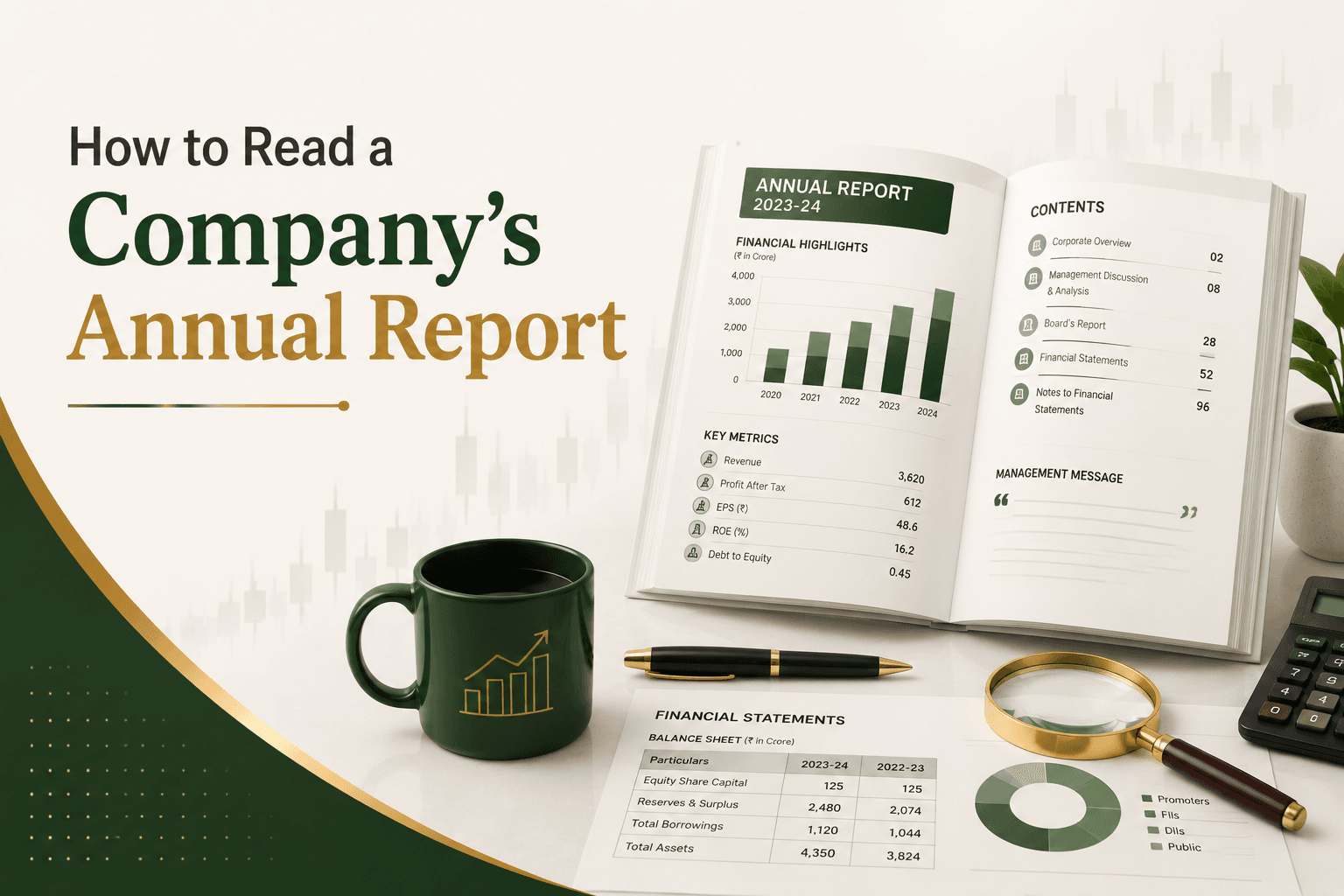
If you've ever opened a company's annual report and felt overwhelmed by pages of numbers and legal disclosures, you're not alone. Most retail investors either skip annual reports entirely or skim only the headline numbers. But learning how to read a company's annual report properly is one of the most valuable skills you can develop if you're serious about investment in the share market.
An annual report isn't just a regulatory formality. It's a company's most comprehensive self-disclosure document, a window into how the business is run, where its money comes from, where it goes, and what risks lie ahead.
Whether you're picking individual stocks or simply trying to understand a company before investing through a share market app, this guide will walk you through exactly how to read an annual report of a company, section by section.
What Is an Annual Report and Why Does It Matter?
An annual report is a document that publicly listed companies are required to publish each year, summarizing their financial performance, business operations, and future outlook. It's typically released a few months after the financial year ends and is made available on the company's website and stock exchange portals.
For investors, the annual report matters because it's one of the few sources of information that comes directly from the company and is subject to audit and regulatory scrutiny. Unlike news articles or analyst opinions, it reflects audited figures and disclosures the company is legally obligated to make. Understanding this document helps you move from speculative stock market decisions to informed ones.
Key Sections of an Annual Report
Most annual reports follow a fairly standard structure. Here's what each section tells you and what to look for.
1. Chairman's or Director's Statement:
This is usually the opening message from leadership, summarizing the year's performance and outlining future plans. While it's often written in an optimistic tone, it's worth reading carefully. Look for consistency: Does this year's message align with what was promised last year? Are challenges acknowledged honestly, or glossed over?
2. Management Discussion and Analysis (MD&A):
This section is one of the most useful for investors. It explains the business environment, industry trends, financial performance drivers, and risks in plain language (compared to the financial statements). It often includes segment-wise performance, which helps you understand which parts of the business are growing or struggling.
3. Financial Statements:
This is the core of the report and includes three primary statements:
- Balance Sheet: Shows the company's assets, liabilities, and shareholders' equity at a specific point in time. It tells you what the company owns and owes.
- Profit and Loss (Income) Statement: Shows revenue, expenses, and profit over the financial year. It tells you how the company performed operationally.
- Cash Flow Statement: Shows how cash moved in and out of the business across operating, investing, and financing activities. Profit on paper doesn't always mean cash in hand, which is why this statement is critical.
Reading these three together gives you a fuller picture than looking at any one in isolation. A company can show profit but still face cash flow problems, or vice versa.
4. Notes to Accounts:
Often skipped, but rarely should be. The notes section explains the accounting policies, assumptions, and detailed breakdowns behind the numbers in the financial statements. Contingent liabilities, related-party transactions, and changes in accounting methods are usually disclosed here. If something in the headline numbers looks unusual, the notes section is where you'll find the explanation.
5. Auditor's Report:
The independent auditor's opinion on whether the financial statements present a true and fair view of the company's financial position. Pay close attention to any qualifications, disclaimers, or "emphasis of matter" remarks; these are red flags that warrant deeper investigation.
6. Corporate Governance Report:
This covers the composition of the board, committee structures, and compliance with governance norms. A well-governed company with independent directors and transparent processes is generally a safer long-term bet.
7. Risk Factors and Disclosures:
Annual reports typically include a section on business, financial, and regulatory risks the company faces. This is useful for understanding what could go wrong, not just what's going right.
Practical Tips for Reading an Annual Report Efficiently
- Compare year-on-year, not just within one report. A single year's numbers mean little without context. Look at trends over three to five years.
- Check revenue and profit growth against industry peers. This tells you whether performance is company-specific or driven by broader sector trends.
- Watch debt levels and interest coverage. Rising debt without proportional revenue growth can be a warning sign.
- Read the cash flow statement closely. Consistent positive operating cash flow is generally a healthier sign than profit growth alone.
- Don't ignore the small print. Notes, contingent liabilities, and related-party transactions often reveal more than the main statements.
How This Fits Into Your Broader Share Market Investment Strategy?
Reading annual reports is not a substitute for diversification, risk assessment, or financial planning; it's one input among many. Many investors today use a share market app to track stock prices, financial ratios, and company filings in one place, which can make it easier to access annual reports and compare data across companies. That said, no app or tool replaces the judgment that comes from understanding the underlying business yourself.
If you're new to stock market investing, it's worth pairing your reading of annual reports with basic financial literacy. Understanding ratios like P/E, debt-to-equity, and return on equity will help the numbers in the report mean more to you.
A Note on Investment Decisions
Annual reports give you information, not certainty. Stock market investments carry risk, and past performance disclosed in an annual report does not guarantee future results. This article is intended for educational purposes to help you understand how to read these documents; it is not investment advice. Before making any investment decisions, consider consulting a registered financial advisor and reviewing all official filings and disclosures available on the company's website or the stock exchange.
Conclusion
Learning how to read a company's annual report takes practice, but it's a skill that compounds in value over time. The more reports you read, the faster you'll spot patterns, inconsistencies, and genuine strengths in a business. Rather than relying solely on stock tips or short-term price movements, going back to the source, the company's own disclosures, gives you a far more grounded basis for your share market investment decisions.