Options trading offers many ways to profit from market movement and, just as importantly, from the absence of movement. One strategy built specifically around low volatility is the short straddle. It's a favourite among experienced traders who expect a stock or index to stay range-bound, but it also carries risks that every investor should understand before using it.
This guide breaks down what a short straddle is, how it works, when traders typically use it, and provides a simple example for better understanding.
What Is a Short Straddle?
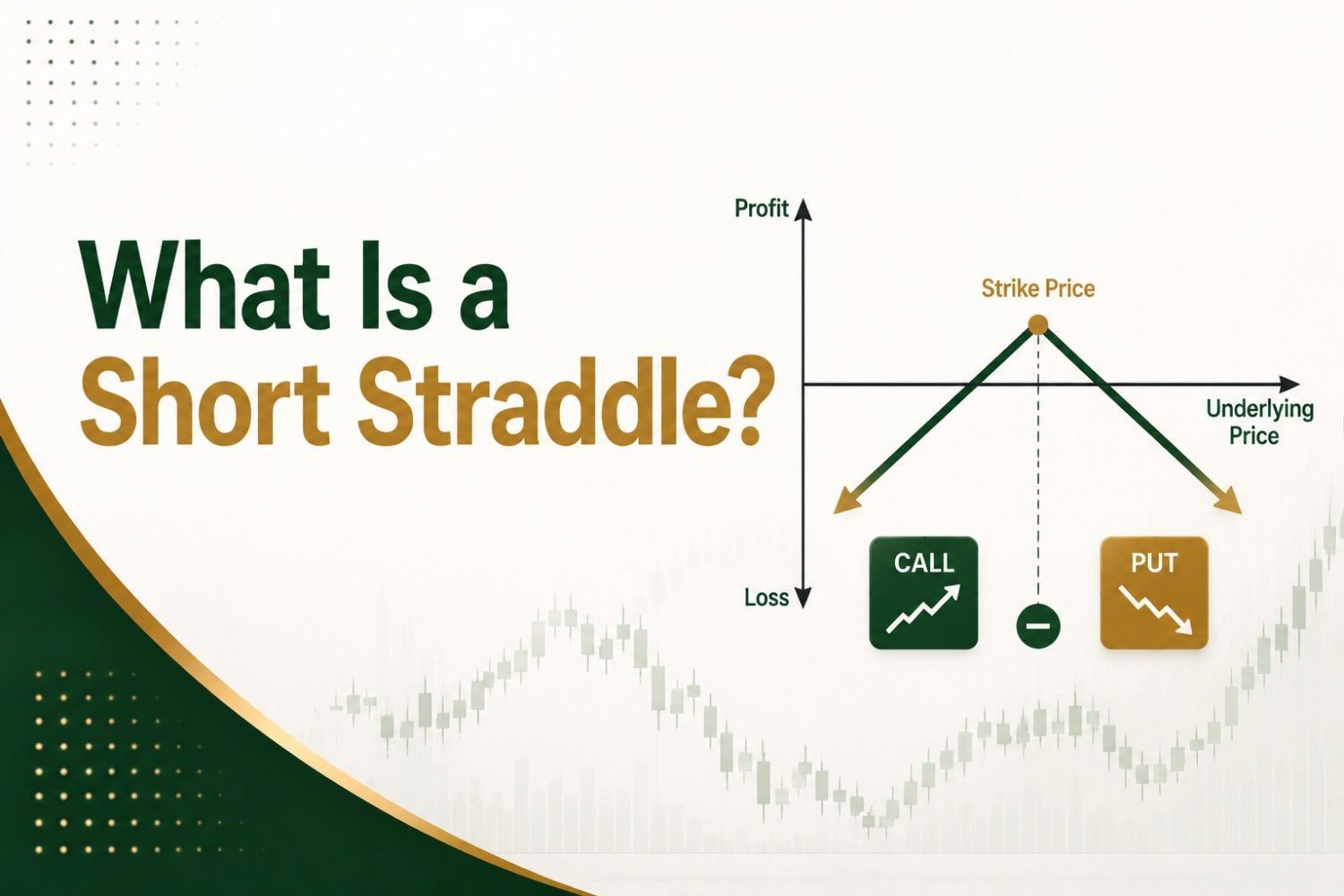
A short straddle is an options strategy in which a trader simultaneously sells a call option and a put option on the same underlying asset, with the same strike price and the same expiry date. Because both options are sold (not bought), the trader receives premium upfront from both legs.
This is the opposite of a long straddle, where an investor buys both a call and a put to bet on a big price move in either direction. A short straddle, by contrast, is a bet on the market staying relatively stable.
In simple terms: when you ask "what is short straddle option" trading, the answer is that it's a premium-collection strategy. The seller profits if the underlying asset's price stays close to the strike price through expiry, allowing both options to expire worthless or lose value, letting the seller keep most or all of the premium collected.
How a Short Straddle Works
Here's a simplified example to illustrate the mechanics:
Suppose a stock is trading at ₹1,000. A trader sells:
- One call option with a strike price of ₹1,000, collecting a premium of ₹20
- One put option with the same ₹1,000 strike price, collecting a premium of ₹20
Total premium received: ₹40 per share (before brokerage, taxes, and other charges).
The Break-Even Zone: The trader makes a profit as long as the stock stays between ₹960 (Strike − Premium) and ₹1,040 (Strike + Premium) at expiry. If the stock stays near ₹1,000 at expiry, both options lose value or expire worthless, and the trader keeps the maximum ₹40 premium as profit.
If the stock moves sharply in either direction, losses can grow. For instance, if the stock rises significantly above ₹1,000, the call option seller faces losses that increase as the price climbs, and those losses are, in theory, unlimited on the upside. If the stock falls sharply, the put seller faces losses too, though these are capped at the point where the stock price reaches zero.
This asymmetry, limited profit potential, but theoretically unlimited risk on one side, is the defining characteristic of a short straddle.
The Risk and Reward Profile
| Aspect | Short Straddle |
| Maximum profit | Limited to the total premium received |
| Maximum loss | Theoretically unlimited (uncapped on the upside; substantial on the downside) |
| Best market condition | Low volatility, range-bound, or sideways price action |
| Worst market condition | Sharp, unexpected price moves in either direction |
| Margin requirement | High, since the position carries significant risk |
Because the loss potential is open-ended, brokers typically require substantial margin to hold a short straddle position. This strategy is generally not considered appropriate for beginners and is more commonly used by experienced traders who actively monitor their positions and have a clear risk management plan, such as predefined stop-losses or hedges.
When Do Traders Use a Short Straddle?
Traders typically consider a short straddle when they expect:
- Low volatility in the near term, often around events where the market has already priced in the uncertainty
- Range-bound price action, where the underlying asset is expected to consolidate rather than trend strongly
- Time decay (theta) working in their favor, since options lose value as expiry approaches if the price doesn't move much
It's worth noting that short straddles carry significant risk precisely because markets can be unpredictable. Earnings announcements, economic data releases, or geopolitical events can trigger sharp moves that catch straddle sellers off guard. For this reason, many traders pair a short straddle with risk-limiting adjustments, such as converting it into an iron butterfly by buying further out-of-the-money options to cap potential losses.
Short Straddle vs. Long Straddle
It helps to compare the two opposite strategies side by side:
- Long straddle: Buy a call and a put at the same strike and expiry. Profits from large price moves in either direction. Risk is limited to the premium paid; profit potential is theoretically unlimited.
- Short straddle: Sell a call and a put at the same strike and expiry. Profits from minimal price movement. Profit is limited to the premium received; risk is theoretically unlimited.
Choosing between the two depends entirely on a trader's view of upcoming volatility, not just price direction.
Why This Matters for Your Broader Investment Approach?
Options strategies like the short straddle are advanced tools, and they sit at the far end of the risk spectrum compared to traditional investments in the share market, such as buying stocks, mutual funds, or index funds for the long term. Most retail investors build their core portfolio through simpler share market investment routes and only explore derivatives like options after gaining experience and a solid understanding of risk management.
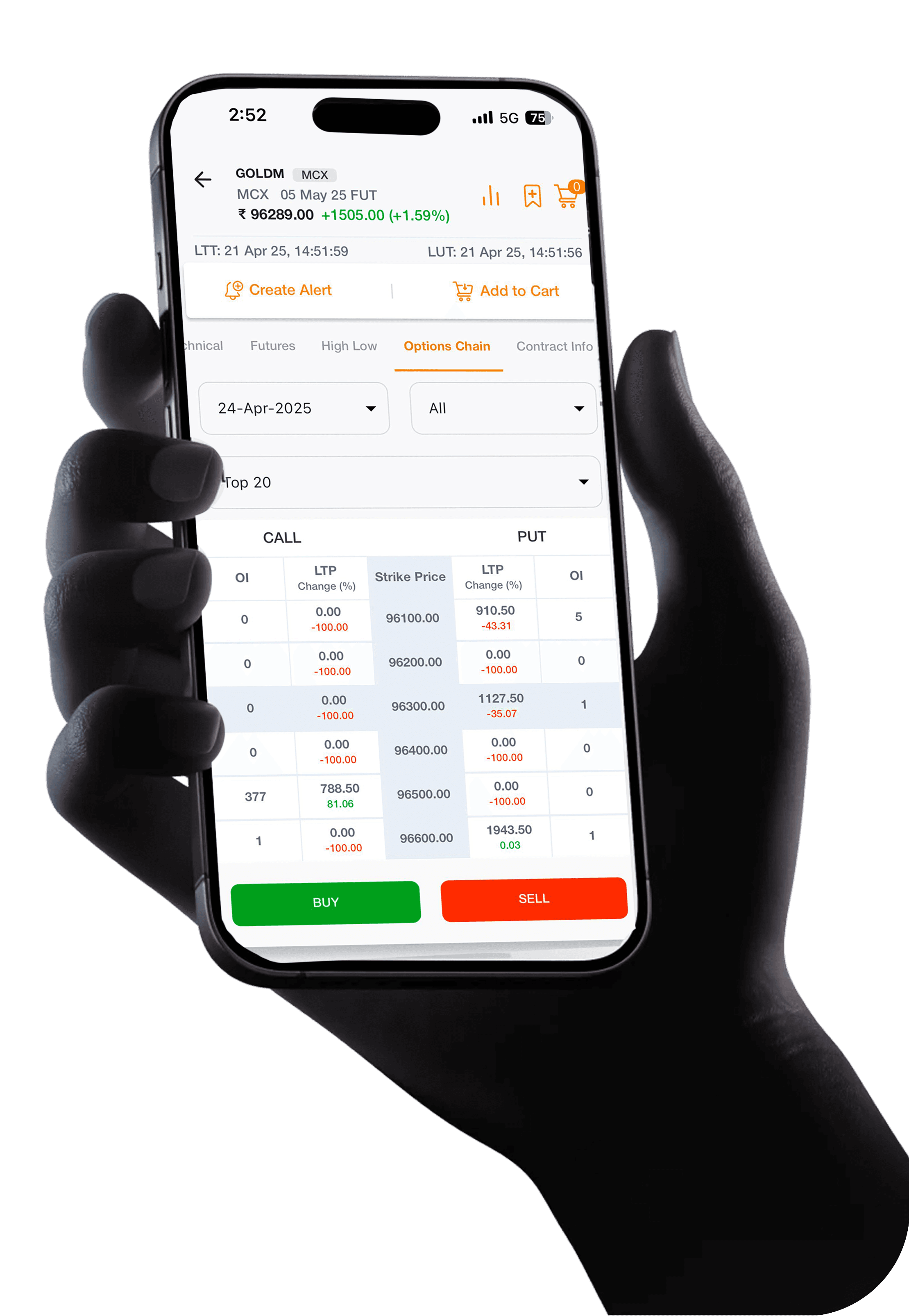
If you're researching strategies like this, it's likely you're also exploring how to track markets, place trades, and manage your portfolio efficiently. A reliable share market app can help with real-time price tracking, options chain analysis, margin calculators, and risk metrics, all of which are useful before attempting strategies as nuanced as a short straddle.
Final Thoughts
A short straddle is a strategy built for traders who expect minimal price movement and want to profit from time decay and stable conditions. While the premium collected can offer steady returns in calm markets, the uncapped risk on the upside makes it unsuitable for those without experience in options trading or a clear risk management plan.
Before using this or any options strategy, it's worth spending time understanding related concepts such as put-call parity, implied volatility, and margin requirements. Combining that knowledge with a dependable share market app and a disciplined approach to position sizing can make a meaningful difference in how safely and effectively you trade.