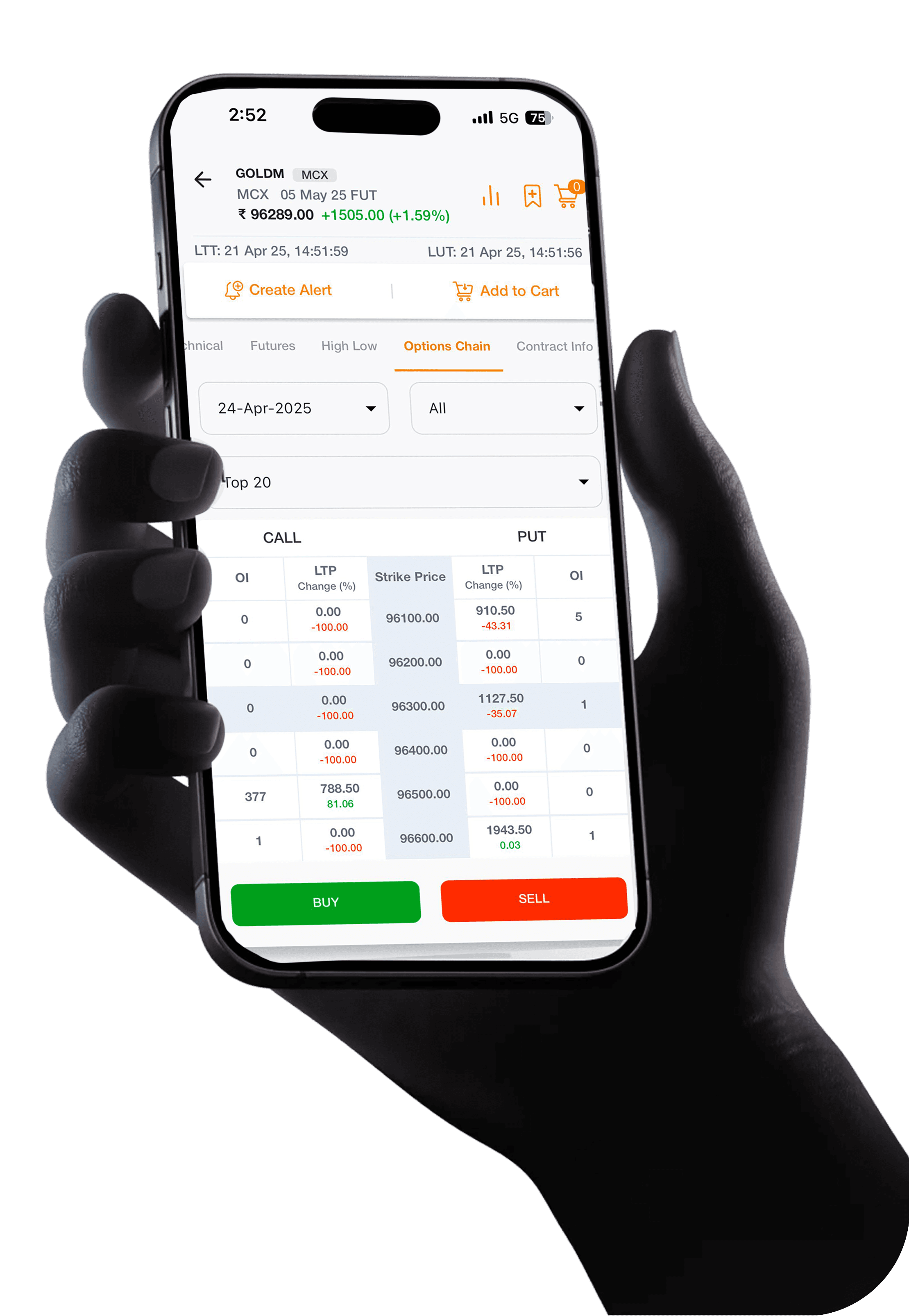

Have you ever wondered why some investors trade only in stocks while others move seamlessly between shares, futures, gold, and currency pairs, all from what looks like a single dashboard? The answer lies in understanding one basic but often overlooked concept: the trading account and its different types.
Before you open a trading account, it helps to know exactly what you are signing up for. Not every trading account works the same way, and choosing the wrong type can mean unnecessary charges, restricted market access, or a platform that does not match how you actually want to invest.
This guide breaks down the types of trading accounts in India, so you can make a decision that fits your goals.
What Is a Trading Account?
A trading account is an account that lets you place buy and sell orders on a stock exchange, such as the NSE or BSE. It works alongside your bank account (for funds) and your Demat account (for holding securities in electronic form), forming the three-way link needed to invest and trade in Indian markets. Simply put, a trading account is the type of account you need whenever you want to participate directly in equity, derivatives, commodity, or currency markets.
Note: The exact features available in a trading account may vary across brokers depending on their exchange memberships, product offerings, and regulatory requirements.
Are There Different Types of Trading Accounts?
Yes. Trading accounts in India are not one-size-fits-all. They can differ based on:
- The market segment you wish to trade in (equity, commodity, currency)
- The features and services offered by the broker (full-service vs. discount, 2-in-1 vs. 3-in-1, cash vs. margin)
Understanding both these dimensions is important, because the right account depends on what you plan to trade and how much hand-holding you need along the way.
Types of Trading Accounts Based on Market Segments
1. Equity Trading Account:
An equity trading account allows you to buy and sell listed equity shares. Many brokers also allow you to activate additional segments such as equity derivatives (futures and options) on the same trading account after completing the required documentation and eligibility checks. This makes it suitable for investors who primarily trade in the equity market while offering flexibility to access other segments if required.
2. Commodity Trading Account:
Investors wishing to trade commodity derivatives such as gold, silver, crude oil, or agricultural commodities typically need to activate the commodity trading segment with a broker that is a member of the relevant commodity exchange. Commodity trading in India takes place on exchanges such as the Multi Commodity Exchange (MCX) and the National Commodity and Derivatives Exchange (NCDEX).
Commodities trading now falls under the regulatory oversight of the Securities and Exchange Board of India (SEBI), which merged with the erstwhile Forward Markets Commission, bringing commodity and securities markets under a single regulator.
3. Currency Trading Account:
A currency trading account is used to trade in currency derivatives, that is, contracts based on the exchange rate movement between currency pairs such as the US Dollar and the Indian Rupee. This segment is typically used by traders looking to hedge currency risk or take a view on exchange rate movements.
It is worth noting that many brokers now allow currency derivatives to be traded through the same trading account used for equities, once the segment is activated. However, commodities usually require separate activation, and in some cases, a separate account, depending on the broker's structure.
Types of Trading Accounts Based on Features
1. Full-Service Trading Account:
A full-service trading account is offered by brokers who provide research reports, investment advisory, relationship manager support, and a wider range of products, alongside trading facilities. These accounts typically suit investors who value guidance and a broader product basket.
2. Discount Trading Account:
A discount trading account focuses purely on execution, offering lower brokerage costs and a straightforward online interface. There is usually little to no advisory support. This type of account is suited to self-directed traders who are comfortable doing their own research and analysis.
3. Cash Account vs. Margin Trading Facility (MTF) Account:
A cash account requires you to pay the full value of the shares you purchase, upfront.
A margin trading facility (MTF) account allows you to purchase shares/equities by paying only a fraction of the total value, with the broker funding the remaining amount against interest and applicable margin requirements, as per SEBI norms.
Margin trading facility can amplify both gains and losses, so it should only be used by investors who understand the associated risks and interest costs.
4. 2-in-1 and 3-in-1 Accounts:
A 2-in-1 account combines a trading account with a Demat account, allowing you to trade and hold securities through a single, linked interface.
A 3-in-1 account links your trading account, Demat account, and bank account together, so fund transfers are integrated, making the trading process more seamless. This is a convenient option for investors who prefer minimal manual fund transfers between accounts.
5. Online and Offline Trading Accounts:
Most trading today happens through online accounts, accessed via websites or mobile trading apps, which allow orders to be placed instantly. Offline trading, where orders are placed by calling or visiting the broker, is less common now but is still available with some full-service brokers for clients who prefer that route.
Comparison Table: Types of Trading Accounts at a Glance
Type of Account | Based On | Best Suited For |
Equity Trading Account | Market Segment | Investors trading in listed equity shares (with derivatives available upon activation, where applicable) |
Commodity Trading Account | Market Segment | Traders dealing in gold, silver, crude oil, agri-commodities |
Currency Trading Account | Market Segment | Traders hedging or speculating on currency movements |
Full-Service Trading Account | Features | Investors who want research, advisory, and broader support |
Discount Trading Account | Features | Self-directed traders focused on low-cost execution |
Cash Account | Features | Investors who pay the full value of trades upfront |
Margin Trading Facility (MTF) Account | Features | Investors seeking leveraged exposure, within SEBI limits |
2-in-1 Account | Features | Investors wanting trading and Demat linked together |
3-in-1 Account | Features | Investors wanting trading, Demat, and bank linked together |
Online Trading Account | Features | Investors trading through apps or web platforms |
Offline Trading Account | Features | Investors preferring assisted, call-based, or in-person orders |
How to Choose the Right Trading Account?
There is no single "best" trading account; the right one depends on your individual profile. Keep these factors in mind:
- Your trading interest: If you plan to trade only in shares, an equity trading account may suffice. If you also want exposure to commodities or currencies, check whether those segments can be activated on the same account.
- Your need for guidance: Newer investors may benefit from a full-service account with research support, while experienced traders may prefer a discount account for lower costs.
- Your risk appetite: A margin trading facility can increase your buying power, but it also increases risk. Assess this carefully before opting in.
- Convenience of fund transfers: If you would rather not transfer funds manually before every trade, a 3-in-1 account may be more convenient.
- Brokerage and charges: Compare account opening charges, annual maintenance charges, and brokerage fees across account types before you decide.
Can One Trading Account Access Multiple Segments?
In many cases, yes. A single trading account can often be enabled for multiple segments, such as equity, derivatives, and currency, once the required activation and documentation is completed with your broker. Commodity trading, however, may need separate activation or a distinct account structure, depending on the broker's exchange memberships and activation process. It is advisable to check directly with your broker on which segments can be added to your existing trading account and what documentation is required for each.
Things to Consider Before Opening a Trading Account
- Ensure the broker is registered with SEBI and is a member of the relevant stock exchanges (NSE, BSE, MCX, NCDEX, as applicable).
- Keep your PAN, Aadhaar, bank account details, and income proof (where required) ready for the account opening process.
- Read the account opening and risk disclosure documents carefully, especially the terms related to margin trading, if applicable.
- Understand the complete fee structure, including brokerage, transaction charges, and any annual maintenance charges on the linked Demat account.
- Check the trading platforms and tools offered, since ease of use can affect your overall trading experience.
Common Mistakes While Choosing a Trading Account
- Opening multiple accounts unnecessarily: Many investors open several trading accounts across brokers without checking whether their existing account can be enabled for additional segments.
- Ignoring the fine print on margin trading: Using MTF without understanding interest costs and margin call requirements can lead to unexpected losses.
- Choosing based on brokerage alone: A low-cost account is not always the right fit if you need research support or guidance, especially as a beginner.
- Not verifying SEBI registration: Always confirm that the broker and the trading account you are opening are properly registered and regulated.
- Overlooking account maintenance charges: Some investors focus only on brokerage rates and miss recurring charges on the Demat side of the account.
Which Trading Account Is Best for Beginners?
There isn't a single "right" trading account for everyone. For most first-time investors, a full-service trading account with an integrated Demat account can provide a smoother onboarding experience through research support, educational resources, and access to multiple investment products. More experienced traders who primarily execute their own strategies may prefer a discount brokerage model focused on lower trading costs. The right choice ultimately depends on your investment objectives, trading frequency, and need for guidance.
Conclusion
Trading accounts are the gateway to participating in India's securities markets; however, not every trading account offers access to the same market segments or services. Whether categorised by market segment, such as equity, commodity, and currency, or by features, such as full-service versus discount, or cash versus margin, each type serves a specific purpose. Taking the time to understand these distinctions before you open a trading account can help you choose an option that genuinely fits your trading goals, risk appetite, and the level of support you need.