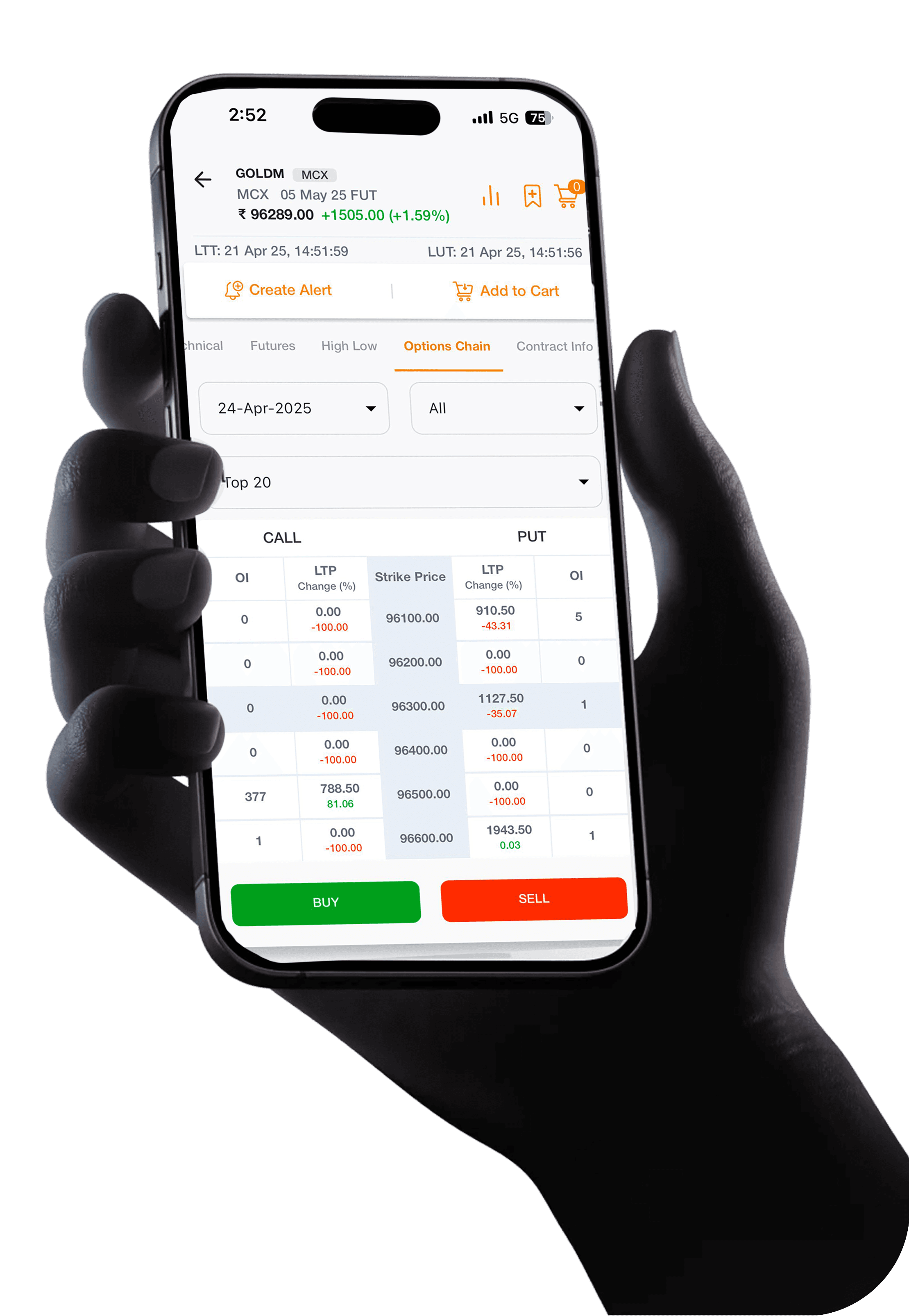

Priya opened her first Demat and trading account after her colleagues kept discussing the stock market during lunch breaks. She had a smartphone, a linked bank account, and a vague idea that "buying shares online" couldn't be too different from online shopping. Two days and one confusing order screen later, she realized there was more to it - order types, settlement cycles, brokerage charges, and a fair bit of terminology she hadn't expected.
If this sounds familiar, you're not alone. Most first-time investors know they want to start, but aren't entirely sure how to trade online in a way that's safe, compliant, and doesn't leave them second-guessing every click.
This guide walks through the practical steps of online trading, explains how an order actually moves from your screen to the stock exchange, and covers the basics you need before you place your first trade.
What Is Online Trading?
Online trading refers to the process of buying and selling financial instruments, such as stocks, bonds, or derivatives, through an internet-based platform, instead of calling a broker or visiting a physical office. Orders for exchange-traded securities are routed electronically to recognized stock exchanges such as the NSE (National Stock Exchange) or BSE (Bombay Stock Exchange).
Before the internet era, investors had to place orders over the phone or in person through a broker, who would then execute the trade on the exchange floor. Today, this entire chain has been digitized. A trading account acts as the bridge between you and the stock exchange, while a demat account holds your securities in electronic form, replacing physical share certificates.
It's worth understanding that online trading and investing are related but not identical. Trading typically refers to buying and selling securities over shorter timeframes to benefit from price movements, while investing generally involves holding securities for a longer period to build wealth. Both use the same trading account infrastructure, but the approach, risk, and time horizon differ.
What Do You Need Before You Start Trading?
Before you place your first order, a few things need to be in place. This isn't paperwork for the sake of it - each requirement exists to keep the market transparent and to protect investors, as mandated by the Securities and Exchange Board of India (SEBI), the regulator overseeing India's securities markets.
Here's what you typically need:
1. A Trading Account:
This is the account through which you place buy and sell orders on the stock exchange. It is opened with a SEBI-registered stockbroker who acts as an intermediary between you and the exchange.
2. A Demat Account:
Short for "dematerialized account," this holds the shares and securities you own in electronic form. When you buy shares, they get credited to your demat account; when you sell, they get debited from it.
3. A Bank Account:
Linked to your trading account for fund transfers - money moves out when you buy securities and comes in when you sell them.
4. KYC Documents:
As per SEBI's Know Your Customer (KYC) norms, you'll need to submit PAN card details, address proof, a bank statement or canceled cheque, a passport-size photograph, and an income proof (for certain segments like derivatives trading). Most brokers now offer a fully digital KYC process using Aadhaar-based e-KYC and video verification, which can be completed within minutes.
5. A Stable Internet Connection and Trading App/Platform:
Since you'll be placing orders online, having access to your broker's trading platform, whether through a website, desktop terminal, or mobile app, is essential.
Once your trading and demat account are opened and linked to your bank account, you're ready to start.
How to Trade Online Using a Trading Account (Step-by-Step)
Here's how the actual process works once your accounts are active.
Step 1: Log In to Your Trading Platform -
Use the credentials provided by your broker to log in to the trading app or web platform. Most platforms require two-factor authentication for security, such as a password combined with an OTP or biometric verification.
Step 2: Add Funds to Your Trading Account -
Transfer money from your linked bank account to your trading account using UPI, net banking, or a payment gateway integrated into the platform. This amount becomes your available trading balance.
Step 3: Research the Stock or Instrument -
Before placing any order, check the company's fundamentals, recent price movement, and market news. Most trading platforms provide live charts, historical data, and basic research tools to help you make an informed decision. This step matters - informed decisions, not impulsive ones, are at the core of responsible investing.
Step 4: Select the Stock and Choose Buy or Sell -
Search for the stock using its name or ticker symbol (for example, a company's NSE or BSE code), and select whether you want to buy or sell.
Step 5: Choose the Order Type and Enter Quantity -
Decide whether you want to place a market order, limit order, or another order type (explained in detail below), and enter the number of shares you wish to trade.
Step 6: Review and Confirm the Order -
Double-check the stock name, quantity, price, and order type before confirming. Once submitted, the order is sent to the exchange for matching.
Step 7: Order Execution and Settlement -
If your order matches with a corresponding buy or sell order at the exchange, it gets executed. Following India's T+1 settlement cycle, shares are credited to your demat account (or funds credited to your bank account, in case of a sale) within one trading day of the transaction.
Step 8: Track Your Portfolio -
After execution, you can monitor your holdings, view contract notes, and track profit or loss through your trading account dashboard or periodic statements sent by your broker.
Example: How an Online Trade Works
Let's say an investor named Arjun wants to buy 10 shares of a listed company currently trading at ₹500 per share.
- She logs into her trading account and searches for the company's stock.
- She checks the current market price and recent price trend.
- She selects "Buy," enters a quantity of 10 shares, and chooses a limit order at ₹500.
- She reviews the order, total value approximately ₹5,000, plus applicable brokerage and statutory charges, and confirms it.
- If the stock price touches ₹500 or lower during market hours, her order gets executed, and 10 shares get credited to her demat account within the T+1 settlement cycle.
- If she later decides to sell those shares at a higher price, the process repeats in reverse, with the sale proceeds credited to her linked bank account after settlement.
This example is illustrative only and does not represent investment advice or a guaranteed outcome. Actual execution depends on market conditions, liquidity, and price movement at the time of order placement.
Common Order Types Explained
Understanding order types helps you control exactly how and at what price your trade gets executed.
- Market Order: Buys or sells a stock immediately at the best available current market price. It prioritizes speed of execution over price control.
- Limit Order: Lets you set a specific price at which you want to buy or sell. The order executes only if the market reaches your specified price or better, though execution isn't guaranteed if the price is never touched.
- Stop-Loss Order: Automatically triggers a market or limit order once a stock reaches a pre-set price, helping to limit potential losses on a position.
- Intraday (MIS) Order: Used for buying and selling the same stock within the same trading day; any unclosed position may be auto-squared-off by the broker before market close.
- Delivery (CNC) Order: Used when you intend to hold the shares beyond the trading day, with actual delivery into your demat account.
- Good Till Triggered (GTT) / Good Till Day (GTD): Orders that remain active until they are executed, canceled, or expire, depending on the validity you choose.
Common Mistakes Beginners Should Avoid
- Trading without research: Acting on tips, social media chatter, or rumors instead of checking company fundamentals and financials.
- Ignoring risk management: Investing a large portion of capital in a single stock or trade without considering diversification.
- Overtrading: Placing too many trades too frequently, which increases transaction costs and can cloud judgment.
- Not understanding order types: Placing a market order when a limit order would have offered better price control, or vice versa.
- Skipping the fine print: Not reviewing brokerage charges, statutory levies (like STT, GST, and stamp duty), and margin requirements before trading.
- Trading on borrowed conviction: Following someone else's trade or "hot tip" without understanding the underlying reasoning or risk.
- Neglecting long-term goals: Treating every trade as a shortcut to quick profit, rather than aligning trading activity with a broader financial plan.
Advantages of Online Trading
- Convenience: Trade from anywhere, at any time during market hours, using a smartphone, tablet, or computer.
- Transparency: Real-time price quotes, order confirmations, and contract notes make the entire process easier to track.
- Lower turnaround time: Orders are executed and settled faster compared to traditional offline trading.
- Access to research and tools: Most platforms provide charts, watchlists, and research reports to support decision-making.
- Cost efficiency: Digital processes have reduced paperwork and, in many cases, brokerage costs compared to traditional trading methods.
- Wider market access: A single trading account can often be used to access equities, derivatives, IPOs, and other instruments.
Things to Remember Before Online Trading
- Investments in securities markets are subject to market risks; read all related documents carefully before investing.
- Past performance of any stock or index is not indicative of future returns.
- Always trade through a SEBI-registered stockbroker and verify their registration on SEBI's or the exchange's official website.
- Never share your trading account login credentials, OTPs, or passwords with anyone, including individuals claiming to represent your broker.
- Be cautious of unsolicited investment tips or guaranteed-return schemes shared via SMS, WhatsApp, or social media; verify all trading calls directly through your broker's official channels.
- Keep your KYC details, contact information, and nominee details updated with your broker and depository participant.
- Start with an amount you're comfortable risking, and consider your financial goals, time horizon, and risk appetite before trading.
- If in doubt, consult a SEBI-registered investment adviser for guidance tailored to your financial situation.
Conclusion
Online trading has made stock market participation far more accessible than it was a generation ago, but accessibility isn't the same as certainty. A trading account gives you the infrastructure to buy and sell securities efficiently, but the outcome of any trade still depends on market conditions, your research, and your risk management. Whether you're taking your first step or refining your approach, the fundamentals remain the same: understand what you're trading, choose your order type carefully, and never lose sight of the risks involved.
If you're ready to begin, opening a trading account with a SEBI-registered broker is the first practical step toward participating in the market with the right safeguards in place.