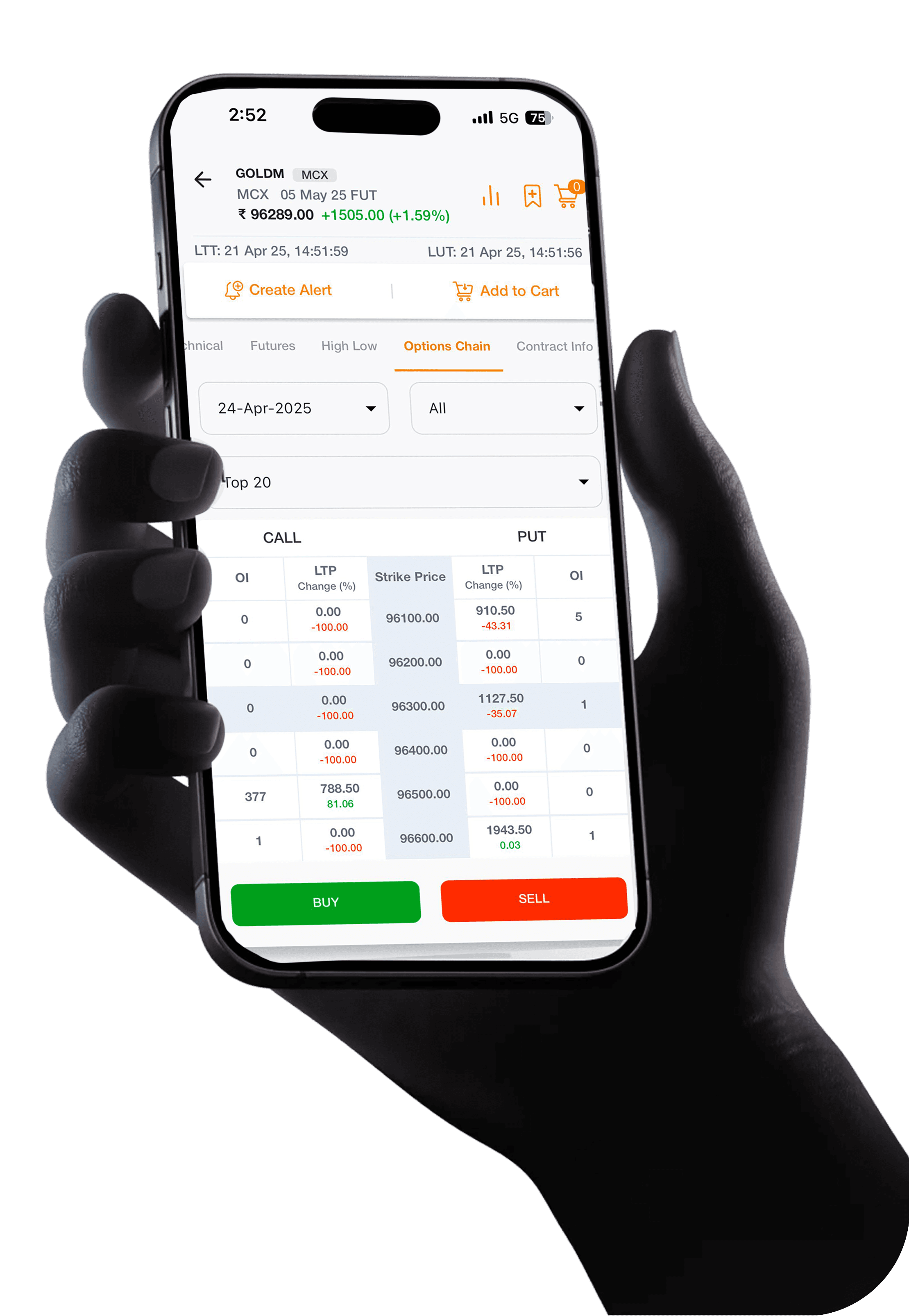
In the Indian stock market, Demat and trading accounts work together to ensure smooth securities transactions. These two accounts form a seamless ecosystem, linked to a bank account, giving you access to the world of financial markets.
Whether you are new to investments or looking to switch to a new broker, knowing how to open a trading account is crucial. In this guide, we’ll explore the steps for opening a trading account - online & offline, documents required, and who can open.
The process is very simple & easy. Keep reading!
What is a Trading Account?
A trading account refers to a regulated account used to buy and sell securities, including equities, derivatives, and commodities, on stock exchanges like the National Stock Exchange (NSE) and the Bombay Stock Exchange (BSE). It serves as a bridge between a Demat account (used to hold securities) and a bank account (used to hold funds), enabling seamless transactions.
How Does A Trading Account Work?
When a trade takes place, the trading account updates securities holdings (Demat) and credit/debit funds (bank) through the linked accounts. Therefore, it is known for maintaining transaction records and providing an overview of trading activity.
How to Open a Trading Account Online?
Let’s take a look at how to open a trading account online step-by-step:
Step 1 - Compare and Choose a Broker: To open both a Demat and a trading account, you’ll have to reach out to a SEBI-registered broker. With so many brokers available in the market, ensure you review and compare different brokerage charges, app features, and customer service.
Step 2 - Register: Once you have selected a broker, register on their platform. To register,
- Visit your broker’s website or trading app
- Browse “Open trading account.”
- Fill in the required details.
Step 3 - Complete e-KYC: The next step is to complete your e-KYC by providing your personal details (Name, PAN, Date of Birth) and uploading the mandatory copies of the documents -
- Aadhar Card
- PAN Card
- Address Proof
- Bank statements.
Step 4 - In-Person Verification: For e-KYC, you can complete video in-person verification through your webcam or mobile camera.
Step 5 - E-Sign: You’ll be required to digitally sign the document using Aadhar-based OTP.
Step 6 - Account Details: Once submitted, your broker will review and verify your application. After verification (usually within 24 - 48 hours) is completed, you’ll receive your Unique Client ID and credentials for the account.
How to Open a Trading Account Offline?
For those who are looking to open trading account offline, follow these steps:
Step 1 - Select a Broker: For an offline trading account opening, you’ll need to choose a SEBI-registered broker and visit their office/branch physically.
Step 2 - Fill Account Opening Form: Complete the physical account opening form by providing basic details.
Step 3 - Submit Documents: You’ll need to complete the KYC by submitting the physical copies of the required documents, such as:
- PAN Card
- Aadhar Card
- Address Proof
- Bank Statements
- Photos
Step 4 - In-Person Verification (IPV): One of your broker’s representatives will perform the IPV process at their office or your location.
Step 5 - Account Details: Once your broker verifies all your documents, your trading account will be opened. You will receive your login credentials.
Documents You’ll Need to Open a Trading Account
Here is the list of documents you’ll require while opening a stock trading account:
Documents Accepted for Identity Proof:
- PAN Card
- Aadhar Card
- Voter ID Card
- Driving License
- Passport
- Any other Identity Card issued by the State or Central Government
Documents Accepted for Address Proof:
- Voter ID Card
- Driving License
- Passport
- Ration Card
- Aadhar Card
- Bank Account Statement or Passbook
- Utility Bills: Electricity or Gas Bill
Documents for Bank Account
- Cancelled Cheque
- Bank Passbook
Documents Accepted for Income Proof (for Derivatives/ F&O - Commodity/ Currency)
- Bank Account Statements (For Last Six Months)
- Latest Salary Slips/ Form 16 (in case of a salaried person)
- ITR Acknowledgement Copy
- Passport
- Net-Worth Certificate Copy (issued by a Chartered Accountant)
- Statement of Demat holdings
Who Can Open a Trading Account?
Individuals and entities who can open a Demat and Trading Account:
- Indian Residents/Individuals (Above 18)
- Minors (Account Managed by Parents/Guardians)
- Non-Resident Indians (NRIs)
- Entities - Hindu Undivided Families (HUFs), Registered Companies, Partnerships, Limited Liability Partnerships (LLPs), and Trusts.
Opening a stock trading account is now easier, faster, and fully digital. You can begin your investment journey confidently with proper research and the right broker.