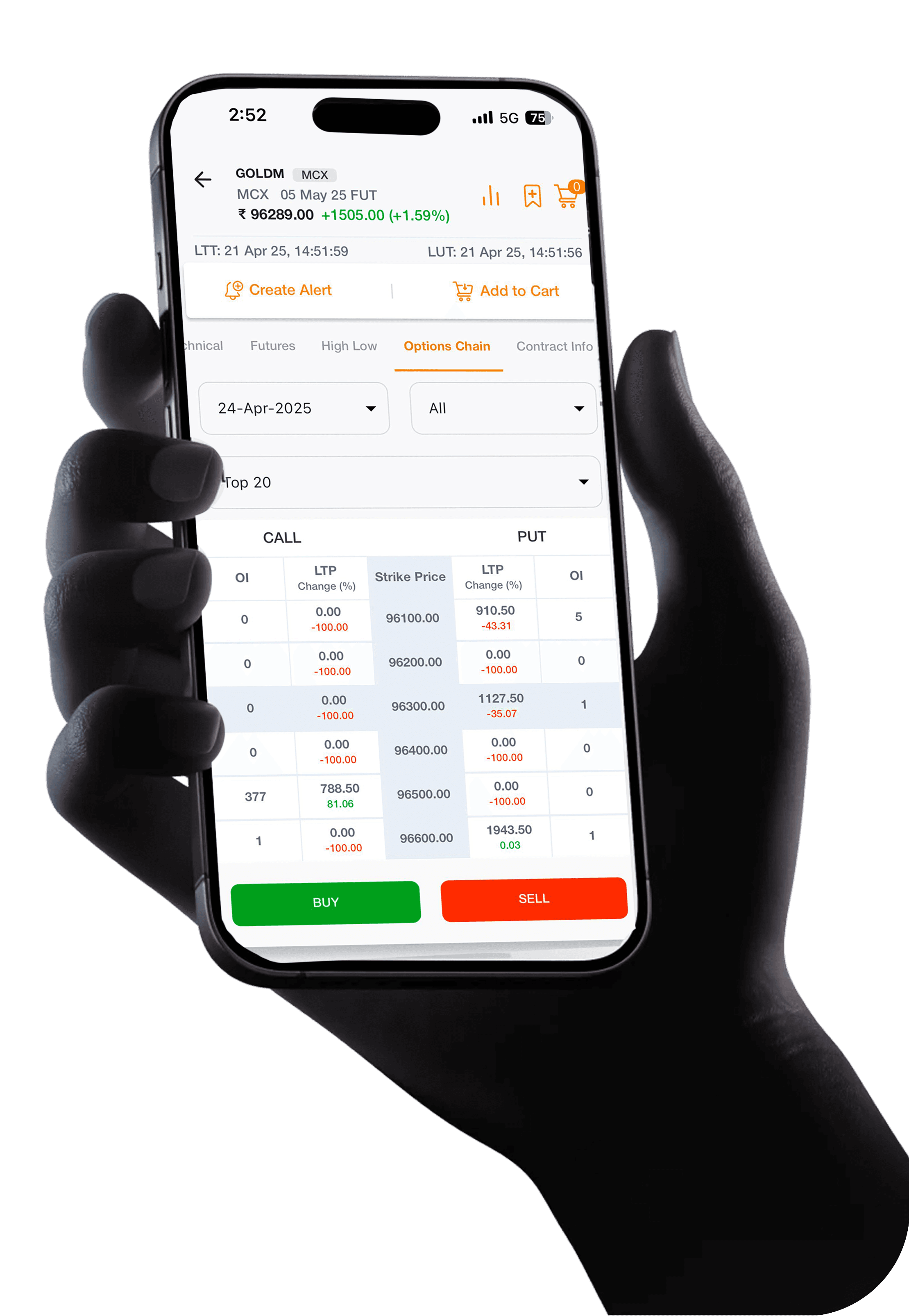
Reports suggest that nearly 11 million people trade equity futures and options. But have you ever wondered what happens when you place a trade in the market? Or what if these trades were never placed from a demat account? Surprisingly enough? Well, that's where a trading account comes into the picture.
Through this blog, we will explore the meaning of a trading account, its types, its uses, key terms you should know, and much more.
Keep reading as you get to peek into your stocks and currencies from your trading account!
Introduction: What Is Trading Account?
A Trading Account is what helps you buy, sell, and place trades in the market. It is like an investment account that acts as a gateway to trade stocks, bonds, commodities, derivatives, or ETFs, available on the stock market.
If you are wondering who uses it often, it's intraday or day traders who daily transact (buy and sell) stocks on the same day's market session. It serves as a primary tool for intraday traders.
Think of a trading account as a bridge (or link) between you (investor/trader) and the stock exchange. So, when you place an order using your trading A/c:
- The broker sends it to the relevant stock exchange.
If it's executed, the securities move to (buy orders)/ from (sell orders) your Demat account, and the funds are debited/credited from your linked bank account.
How Does A Trading Account Work?
In simple terms, understanding how a trading account works is like your shopping experience.
Similar to an e-commerce website, this account acts like a shopping cart, the stock exchange is the marketplace, the Demat account is your storage cupboard, and your bank account is your wallet.
Stage 1: Linking Trading, Demat, and Bank Account
In the backend, your trading A/c must be linked to your bank account (for fund transfer) and demat account (for securities storage).
Stage 2: Placing orders
Once you log in to your broker's platform (app or website), you can place a buy or sell order (via trading A/c).
Stage 3: Order routing
The broker forwards your order to the respective exchange (like NSE or BSE), where it's matched with an opposite order (buyer/seller).
Stage 4: Trade execution
If the price and quantity match, the order gets executed. For buy orders, shares get credited to your Demat account, and vice versa for sell orders.
Stage 5: Settlement
With orders executed today, they get settled later. In India, the settlement period follows a T+1 cycle (trade date + 1 working day). But it can differ as per order type.
Why Do You Need A Trading Account?
The only reason you will need a trading account is to access the stock market. It is like a permit/license that allows you to buy and sell securities. Although you have a car (demat account) and fuel (money), you cannot drive the vehicle legally on the road without this account. However, this was not possible a few decades ago.
Earlier, brokers (or registered members) used to represent traders and execute orders on their behalf. This was prevalent because investors could not directly trade stocks in India. Instead, these registered members performed for them. However, later on, trading accounts replaced this system, allowing users to open accounts with registered brokers. And that's how this question justifies the trading account meaning and its usage.
Key reasons why you need a trading account include;
- Access to multiple instruments – Trade in equities, derivatives, commodities, and more from one platform.
- Direct market access – Without it, you can't interact with stock exchanges like NSE or BSE.
- Real-time execution – Lets you instantly buy or sell shares at real-time prices.
- Integrated with Demat & Bank account – Ensures smooth flow of money and shares.
Types Of Trading Account
While the use of a trading account is to execute buy/sell orders, it cannot be used for all securities. Based on the type of instrument traded, even the account type differs. Now that you know what is trading account, let us explore the different types of accounts.
Equity Trading Account
This account is primarily used for trading in stocks, ETFs, IPOs, and equity derivatives (futures & options). You can also link it to your Demat account for delivery-based trades.
Commodity Trading Account
Traders require this account to trade commodities like gold, silver, crude oil, or agricultural products on exchanges like MCX or NCDEX.
Derivatives Trading Account
As the name suggests, it is specifically used for futures and options trading in equities, commodities, or currencies. Often part of your main account, but may require activation.
Discount Brokerage Trading Account
Mostly offered by discount brokers, it comes with low brokerage fees. Here, the main focus is on execution, with minimal advisory or research support.
Full-Service Brokerage Trading Account
Offering not only trade execution, but a full-service brokerage account also provides research, portfolio management, and advisory services. However, the charges are higher for brokerage compared to discount brokers.
2-in-1 account and 3-in-1 account
With its true meaning, a 2-in-1 account is a combination of "Trading account + Demat account." Similarly, a 3-in-1 account gives you the benefit of "Trading account + bank Account + Demat account."
Online trading and Offline Trading accounts
Through your mobile app or desktop, you can use this online account. Here, you get real-time market access, research tools, and portfolio tracking at your fingertips.
In contrast, an Offline Trading account relies on the traditional calling system. You call the broker to place or sell orders or give in-person instructions.
Common Terms You’ll Encounter While Using a Trading Account
Here is the list of the commonly used and important trading terms when using a trading A/c:
- Demat Account – It stores your shares in electronic form.
- Broker – The medium that executes your trades on the exchange.
- Market Order – Buy/sell immediately at the current market price.
- Limit Order – A set price for buy/sell trades.
- Stop Loss – Automatically sells to limit losses if the price drops to a set level.
- Margin – Borrowed funds from your broker to trade bigger volumes. It is also known as Margin Trading Facility (MTF).
- Intraday Trading – Buy and sell the same stock on the same day.
- Delivery Trading – Buy and hold stocks beyond one trading day.
- Brokerage Fee – Commission charged for each trade.
- LTP (Last Traded Price) – The most recent transaction price of a stock.
Conclusion
On a broader level, a trading account’s meaning serves multiple purposes for intraday traders. From executing buy/sell orders and direct market access to numerous instrumental access, this account is a gateway to several investment opportunities. If you're still wondering why it is used, it's likely because you can open a trading A/c to buy securities, but a demat account doesn't offer the same flexibility.