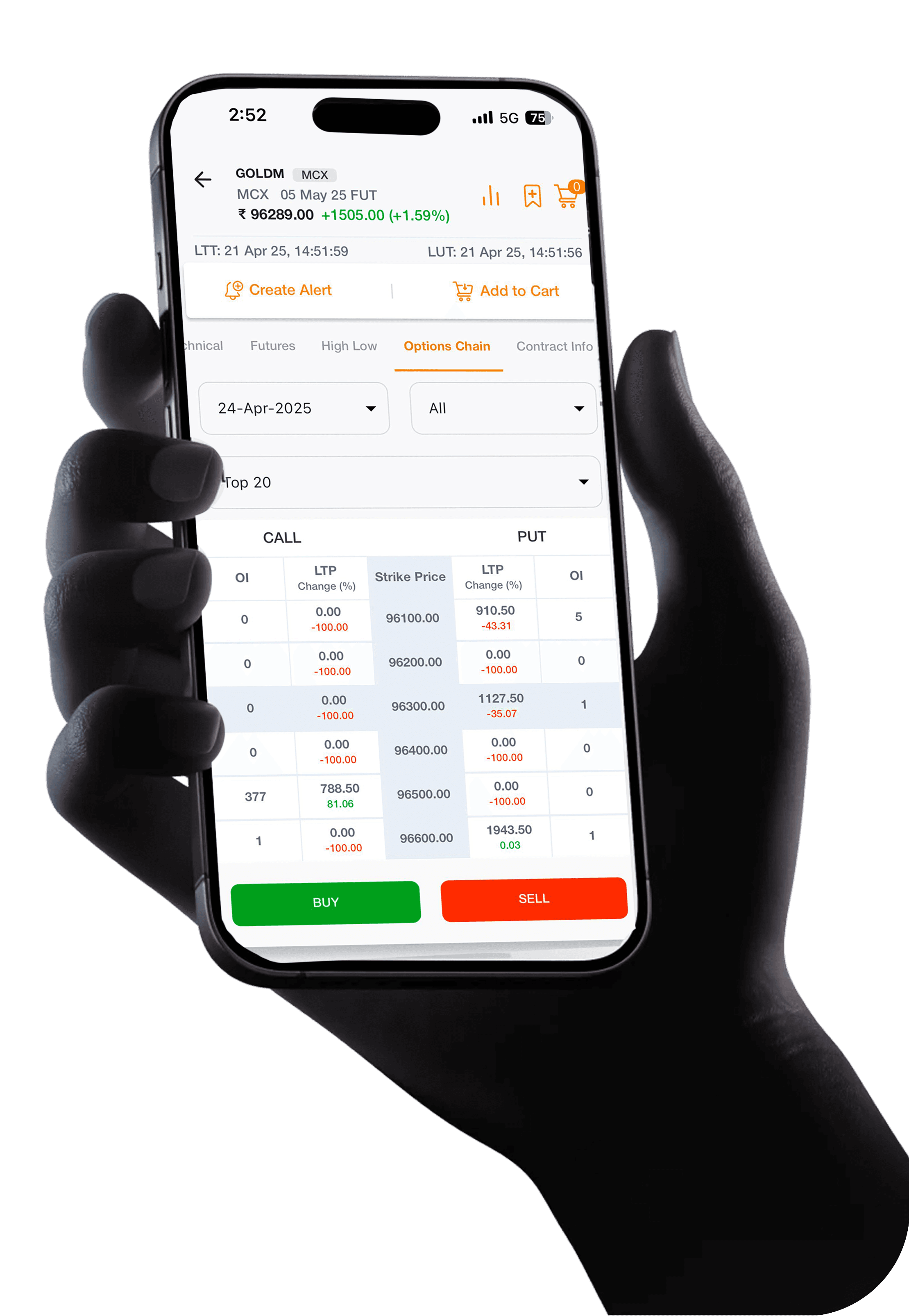

Gold has long held a special place in Indian households, not just as jewellery but as a financial asset that offers a hedge against inflation and market volatility. Today, investors no longer need to buy physical gold to gain this exposure. Two of the most popular paper-gold options available when you invest in mutual funds online are Gold ETFs (Exchange Traded Funds) and Gold Funds (gold-oriented mutual funds, also called gold savings funds).
While both routes ultimately track the price of gold, they differ meaningfully in how they are structured, how you can buy them, and how they are taxed. Choosing between a gold ETF and a gold mutual fund investment isn't about which one is "better" in absolute terms; it depends on your investment style, whether you have a demat account, and how actively you want to manage the investment.
This guide breaks down gold ETF vs gold mutual fund in detail, so you can make an informed decision that fits your financial plan.
What Is a Gold ETF?
A Gold ETF is an exchange-traded fund that invests in physical gold of 99.5% purity. Each unit broadly represents a small quantity of gold, and the ETF's price moves in line with domestic gold prices, give or take a small tracking error. Gold ETFs are listed and traded on stock exchanges like the NSE and BSE, just like shares.
Because they trade on an exchange, you need an active demat and trading account to invest in or redeem gold ETFs. Units can be bought or sold at real-time market prices during trading hours, which makes them fairly liquid.
What Is a Gold Fund (Gold Savings Fund)?
A Gold Fund, often called a gold savings fund, is a mutual fund scheme structured as a "fund of funds." Instead of holding gold directly, it pools investor money and primarily invests in units of an underlying gold ETF (and sometimes in other gold-related instruments). You buy and sell units of a gold fund like any other mutual fund, through an Asset Management Company, a registrar, or any platform that lets you invest in mutual funds online.
The biggest practical advantage here is accessibility: you don't need a demat account to invest in a gold fund, and you can start a Systematic Investment Plan (SIP) with small, fixed amounts at regular intervals, something that isn't natively built into ETF investing.
Gold ETF vs Gold Fund: Key Differences
| Parameter | Gold ETF | Gold Fund (Gold Savings Fund) |
|---|---|---|
| Structure | Directly holds physical gold | Fund of funds; invests in a gold ETF |
| Demat Account | Mandatory | Not required |
| Mode of Purchase | Bought/sold on the stock exchange like a share | Bought/sold through the AMC or mutual fund investment platforms |
| SIP Facility | Not directly available (some platforms offer ETF SIPs via workarounds) | Easily available; ideal for disciplined, small-ticket investing |
| Liquidity | High; tradeable during market hours at live prices | Redemption processed at end-of-day NAV |
| Costs | Brokerage, demat charges, expense ratio (typically low) | Expense ratio (typically higher, as it layers over the underlying ETF's costs); possible exit load |
| Minimum Investment | Cost of one unit (roughly the price of ~1 gram of gold or less) | Can start with amounts as low as ₹100–500 via SIP |
| Holding Period for LTCG | 12 months (for units purchased on or after 1 April 2025) | 24 months |
| Tracking Error | Generally lower, since it holds gold directly | Slightly higher, since it holds the ETF, adding a second layer of cost and tracking variance |
Taxation: Gold ETF vs Gold Mutual Fund
Taxation is often the deciding factor for many investors, so it's worth understanding the current rules carefully.
Gold ETFs:
Gains are classified as short-term if units are sold within 12 months of purchase (for units bought on or after 1 April 2025) and taxed at your applicable income tax slab rate. If held beyond 12 months, gains qualify as long-term capital gains (LTCG) and are taxed at a flat 12.5%, without the benefit of indexation.
Gold Mutual Funds:
The holding period threshold for long-term classification is 24 months. Gains within 24 months are treated as short-term and taxed at slab rates; gains beyond 24 months are treated as long-term and taxed at 12.5% without indexation.
GST: Neither gold ETFs nor gold mutual fund units attract GST on purchase, unlike physical gold, which is subject to GST.
This means gold ETFs currently enjoy a shorter holding period to qualify for the more favourable long-term tax treatment compared to gold funds. Tax rules are revised periodically through the Union Budget and Finance Acts, so it's worth checking the latest provisions or speaking to a tax professional before you act on this information.
Costs Involved
Gold ETFs are generally considered the more cost-efficient route. You pay brokerage on each transaction and bear the fund's expense ratio, but there's no additional layer of fund management on top of that.
Gold funds, being a fund of funds, carry the expense ratio of the underlying ETF plus their own management expenses, which usually makes their total expense ratio somewhat higher. Some gold funds may also levy an exit load if units are redeemed within a specified period. This added cost is the trade-off for the convenience of SIPs and not needing a demat account.
Which One Should You Choose?
There's no universal answer; it depends on how you intend to invest:
- Choose a Gold ETF if you already have a demat account, want lower running costs, prefer trading flexibility during market hours, and are comfortable making lump-sum decisions.
- Choose a Gold Fund if you don't have a demat account, want to invest in mutual funds online through a simple SIP, and prefer the convenience of rupee-cost averaging over time without actively tracking the market.
Both instruments are well-regulated, transparent alternatives to holding physical gold, and either can play a useful role as a small allocation within a diversified portfolio, rather than as a standalone investment.
Final Thoughts
Both Gold ETFs and Gold Funds offer a convenient, paper-based way to gain exposure to gold without the storage and purity concerns of physical gold. The choice between a gold ETF vs gold mutual fund ultimately comes down to your access to a demat account, your preferred investment frequency, and how sensitive you are to costs and holding-period-based taxation.
As with any mutual fund investment, it's advisable to read the scheme-related documents carefully and assess your own risk appetite and financial goals, or consult a SEBI-registered investment adviser before investing.