Trading Stocks
Trading sector stocks represent companies engaged in the buying, selling, sourcing, and distribution of a wide range of products across domestic and international markets. These businesses play a critical role in connecting manufacturers, suppliers, and end customers, helping goods move efficiently through the economy.
Trading Sector Stocks List 2026
474 Stocks| Company | LTP | Market Cap | Volume | 52 Week Low | 52 Week High |
|---|---|---|---|---|---|
| Adani Enterprises Ltd | 2,850 | ₹3,85,727.60 CR | 94,270 | 1,753.45 | 3,245 |
| Aegis Logistics Ltd | 1,396.4 | ₹49,013.64 CR | 33,852 | 576 | 1,528 |
| Premier Energies Ltd | 904.35 | ₹41,053.10 CR | 86,454 | 660.8 | 1,134 |
| Redington Ltd | 405.7 | ₹31,716.59 CR | 1,18,759 | 191.25 | 419.55 |
| Honasa Consumer Ltd | 478.1 | ₹15,587.22 CR | 9,89,717 | 248.55 | 509.9 |
| Lloyds Enterprises Ltd | 78.73 | ₹12,036.24 CR | 1,79,384 | 40.86 | 84.72 |
| RRP Semiconductor Ltd | 8,125.6 | ₹11,070.32 CR | 19 | 7,623.05 | 11,902 |
| Augmont Enterprises Ltd | 1,161.2 | ₹10,610.29 CR | 79,991 | 797.75 | 1,263.7 |
| SG Mart Ltd | 742.7 | ₹9,363.55 CR | 6,341 | 313.3 | 861.5 |
| MMTC Ltd | 57.04 | ₹8,556.00 CR | 32,257 | 51.25 | 78.38 |
| GNG Electronics Ltd | 684.9 | ₹7,808.65 CR | 54,519 | 239 | 728.85 |
| Arvind Fashions Ltd | 406.2 | ₹5,431.08 CR | 8,082 | 366.6 | 572.2 |
| Purple Style Labs Ltd | 522.7 | ₹4,184.79 CR | 9,769 | 500.85 | 588.1 |
| Refex Industries Ltd | 265.3 | ₹3,640.67 CR | 70,960 | 188 | 382.05 |
| Shankara Buildpro Ltd | 1,305.75 | ₹3,166.36 CR | 7,779 | 633.4 | 1,379.8 |
| Fischer Medical Ventures Ltd | 33.09 | ₹2,311.95 CR | 14,561 | 31 | 121.45 |
| BN Agrochem Ltd | 221.55 | ₹2,166.16 CR | 990 | 193 | 419.95 |
| Keto Motors Ltd | 248.9 | ₹1,753.11 CR | 11,619 | 104.99 | 367.85 |
| Kothari Industrial Corporation Ltd | 148.25 | ₹1,601.42 CR | 666 | 124 | 565.8 |
| Q-Line Biotech Ltd | 658.15 | ₹1,535.35 CR | 40,800 | 431 | 735 |
| Onix Solar Energy Ltd | 337.95 | ₹1,245.95 CR | 40,255 | 149.88 | 782.21 |
| Arisinfra Solutions Ltd | 143.65 | ₹1,174.97 CR | 66,772 | 82.4 | 178.75 |
| Pervasive Commodities Ltd | 12.58 | ₹1,133.40 CR | 25 | 1.26 | 12.58 |
| Bharat Global Developers Ltd | 108.4 | ₹1,097.65 CR | 22,366 | 78.2 | 248.4 |
| Nupur Recyclers Ltd | 157 | ₹1,084.38 CR | 66,546 | 45.1 | 167.26 |
| Dhunseri Ventures Ltd | 280 | ₹980.56 CR | 115 | 176.2 | 372 |
| Vision Infra Equipment Solutions Ltd | 369.9 | ₹918.92 CR | 13,600 | 202.35 | 417.5 |
| Oricon Enterprises Ltd | 52.27 | ₹820.89 CR | 902 | 48 | 73 |
| Neueon Corporation Ltd | 13.98 | ₹790.49 CR | 2,518 | 5.49 | 28.2 |
| Yogi Ltd | 162.5 | ₹731.25 CR | 703 | 138 | 192.2 |
What are Trading Sector Stocks?
Trading sector stocks represent companies engaged in the buying, selling, sourcing, and distribution of a wide range of products across domestic and international markets.
These businesses play a critical role in connecting manufacturers, suppliers, and end customers, helping goods move efficiently through the economy.
The performance of trading shares is often influenced by domestic and global economic growth, commodity prices, import-export demand, and supply chain efficiency.
Things to Consider Before Investing in Trading Sector Stocks
Before adding trading sector stocks to your portfolio, it's important to understand the factors that can influence their performance:
1. Economic Activity:
Trading companies are closely linked to business activity and consumer demand. Strong economic growth generally supports higher trade volumes and revenue generation.2. Commodity and Product Prices:
Many trading businesses deal in commodities and industrial goods. Significant price fluctuations can impact profitability and working capital requirements.3. Import and Export Trends:
Companies involved in international trade are influenced by global demand, trade policies, tariffs, and geopolitical developments.4. Supply Chain Efficiency:
Efficient sourcing, inventory management, and logistics operations can significantly improve margins and competitiveness.5. Currency Movements:
For export- and import-oriented trading companies, exchange rate fluctuations can affect costs, revenues, and overall profitability.6. Company Fundamentals:
Investors should evaluate revenue growth, operating margins, return ratios, debt levels, inventory management, and cash flow generation when assessing trading shares.
What are the Benefits of Investing in Trading Sector Stocks?
Here's why investors consider adding trading sector stocks to their portfolios:
1. Exposure to Multiple Industries:
Many trading companies operate across various sectors such as commodities, agriculture, metals, energy, and consumer goods, reducing dependence on a single industry.2. Benefiting from Economic Growth:
As trade volumes increase alongside economic expansion, trading businesses may experience higher sales and earnings opportunities.3. Global Market Participation:
Several companies in the trading sector stock list have significant import-export operations, allowing investors to benefit from international trade activity.4. Asset-Light Business Models:
Compared to manufacturers, some trading businesses require lower capital investment in production facilities, which can support operational flexibility.5. Diversified Revenue Streams:
Companies dealing with multiple products and markets may be better positioned to manage fluctuations in individual industries or commodities.
What are the Different Types of Companies in the Trading Sector?
The trading sector shares list includes companies operating across several business segments:
- 1. Commodity Trading Companies: These businesses trade products such as metals, minerals, agricultural commodities, energy products, and industrial raw materials.
- 2. Import-Export Trading Companies: They facilitate international trade by sourcing products from one market and supplying them to customers in another.
- 3. Industrial Product Traders: These companies distribute machinery, equipment, chemicals, engineering products, and industrial supplies to businesses.
- 4. Consumer Goods Trading Companies: Some trading firms focus on sourcing and distributing consumer products, including electronics, lifestyle goods, and packaged products.
- 5. Diversified Trading Companies: These businesses operate across multiple product categories and industries, generating revenue from a broad range of trading activities.
Who Can Invest in Trading Sector Stocks?
Trading shares are listed on stock exchanges and can be suitable for various categories of investors, including:
- →Retail investors seeking exposure to domestic and global trade activity
- →Long-term investors interested in diversified business models
- →Institutional investors looking to participate in economic and industrial growth
- →High-net-worth individuals (HNIs) seeking sector-focused investment opportunities
- →Traders looking to benefit from commodity cycles, trade developments, and market trends
How To Invest in Trading Stocks with Anand Rathi?
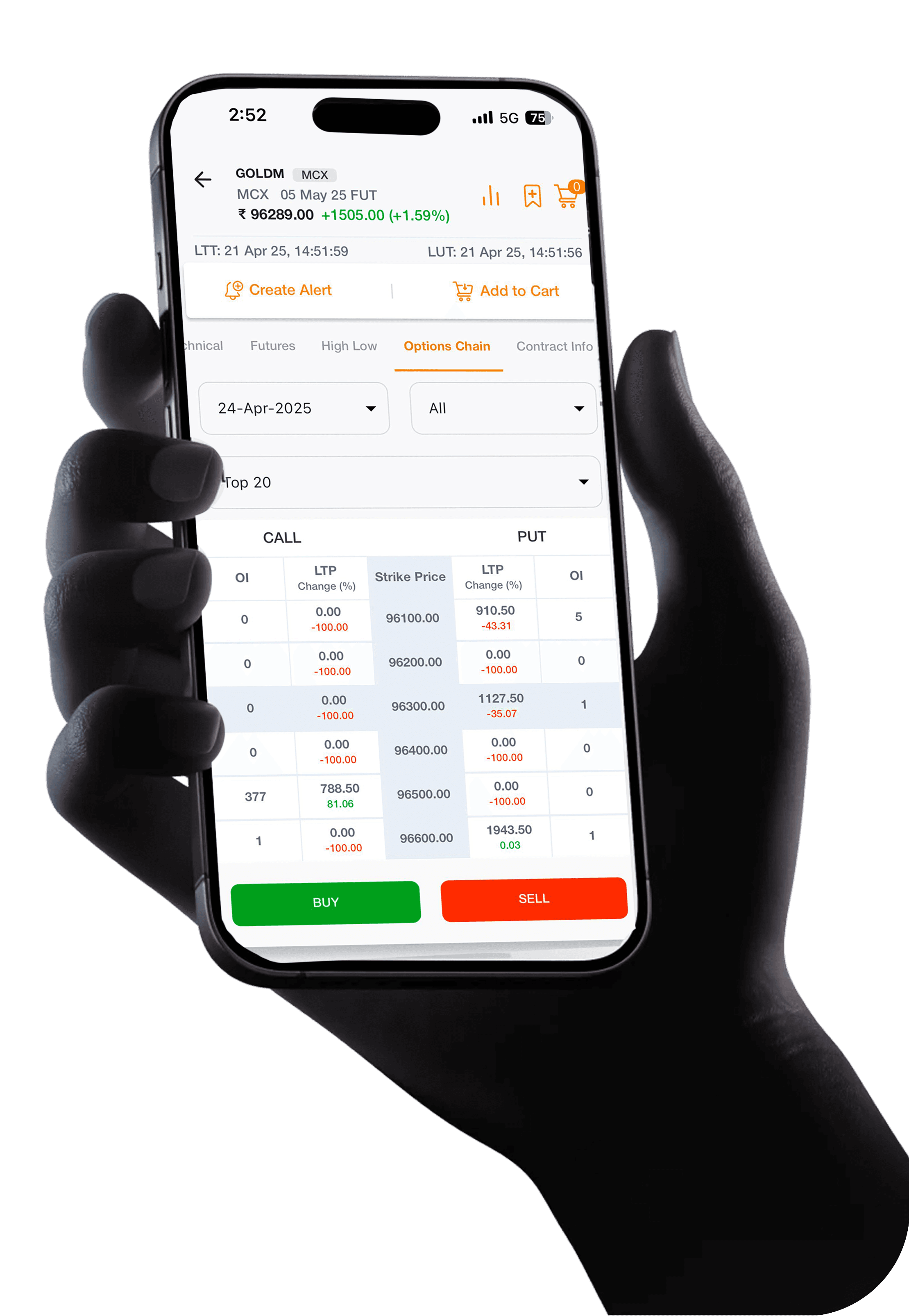
Investing in trading stocks through Anand Rathi's TradeMobi app involves a few simple steps:
1. Open a Trading and Demat Account:
You need to register yourself with Anand Rathi and open a demat/trading account to start investing in the trading sector stocks.2. Add Funds to Your Account:
You'll be required to transfer money from your bank account to your trading account via net banking or UPI.3. Research Trading Sector Stocks:
Login to the TradeMobi app, search for the trading sector stocks list, and select the stock you are interested in investing in.4. Place Your Order:
You may enter the number of shares you want to invest in and place your order to buy the stocks at either the current price or a predetermined price.5. Track and Manage Your Investments:
Once you have invested in your shares, you can track your investments and keep a tab on the performance of your stocks as well as the market trend.
Explore Other Popular Sectors
Disclaimer
The information provided on this page is for informational purposes only and should not be construed as investment advice, recommendation, or solicitation to buy or sell any securities or financial pr...
Frequently Asked Questions
- Domestic and global economic growth
- Commodity price movements
- Import and export demand
- Exchange rate fluctuations
- Supply chain and logistics efficiency
- Government trade policies and regulations
- Company-specific operational performance
- Commodity price volatility
- Economic and demand slowdowns
- Foreign exchange fluctuations
- Supply chain disruptions
- Regulatory and trade policy changes
- Working capital and inventory management challenges
Download TradeMobi App
- Real-Time Market Data
- Advanced Trading Tools
- Expert-Backed Research