The stock market is a key part of the global financial system: it enables companies to raise capital and gives investors a way to share in business growth. Whether you're new to investing or looking to diversify your portfolio, knowing how the various stock market structures work can help you make smarter financial decisions.
For many people, investing in share market instruments has become a popular path to building long-term wealth. Still, before investing in the share market, it's crucial to understand how different stock markets operate and how they differ from each other.
This guide explains the major types of stock market categories, their features, and why they matter to investors.
What Is a Stock Market?
A stock market is a financial marketplace where securities - shares, bonds, and derivatives - are traded between buyers and sellers. It acts as a bridge between companies seeking funds for growth and investors looking to grow their wealth through market-linked investments.
Businesses list their shares on stock exchanges to raise capital from the public, while investors buy these shares with the aim of earning returns through dividend income and an increase in share prices over time.
Types of Stock Market
The stock market can be classified in different ways based on how securities are issued, traded, and regulated. Here are the major types of stock market structure:
1. Primary Market vs. Secondary Market:
This is the most fundamental distinction in the world of stock markets.
a) Primary Market:
The primary market is the segment where companies offer securities to the public for the very first time. When a company aims to raise funds from investors, it may launch an Initial Public Offering (IPO), through which people can buy shares directly from the company. The capital raised is typically used for business growth, expansion plans, reducing liabilities, or supporting operational needs.
Think of it as buying a brand-new product directly from the manufacturer.
Key characteristics:
- Securities are issued here for the first time
- Funds go directly to the issuing company
- Transactions happen between the company and investors
- Examples: IPOs, Follow-on Public Offers (FPOs), Rights Issues
b) Secondary Market:
Once shares/stocks are issued in the primary market, they are purchased and sold among investors in the secondary market. This is the part of the stock market that most people refer to in everyday discussions, where trading of listed company shares takes place regularly.
Stock exchanges such as the Bombay Stock Exchange (BSE) and the National Stock Exchange (NSE) in India, as well as the New York Stock Exchange (NYSE) and NASDAQ in the United States, function as secondary markets. In these markets, investors buy and sell shares among themselves after the shares have already been issued by the company. Since the transactions take place between investors, the company does not receive any money from these trades.
Key characteristics:
- Already-issued securities are bought and sold
- Share or stock prices are determined by the forces of demand and supply
- Provides liquidity to investors
- Daily trading volumes can run into billions of dollars/rupees
2. Equity Market (Stock Market):
The equity market, the most commonly discussed type, is where shares or stocks of companies are traded. When you buy a share, you're purchasing a small ownership stake in that company.
Returns in the equity market can come in two forms:
- Capital appreciation - when the share price rises
- Dividends - a portion of the company's profits distributed to shareholders
Equity markets are known for offering significant long-term capital appreciation compared to most other asset classes, but they also carry higher short-term risk. For those with a long investment horizon and a reasonable risk appetite, investment in share market equities has historically been one of the most effective wealth-building tools.
3. Debt Market (Bond Market):
The debt market is a segment of the financial market where bonds and other fixed-income securities are bought and sold. In this market, governments, corporations, and public institutions raise funds by issuing bonds to investors. In return, they agree to repay the invested amount after a specified period along with regular interest payments, commonly known as coupon payments.
Unlike equity, bondholders are creditors, not owners, of the issuing entity. This makes debt instruments generally lower in risk compared to stocks, though the returns are also typically more modest.
Common instruments traded:
- Government securities (G-Secs)
- Corporate bonds
- Treasury bills
- Municipal bonds
The debt market plays a critical role in the overall financial ecosystem and is often used by conservative investors or those nearing retirement to balance their portfolios.
4. Money Market:
The money market deals in short-term debt instruments, typically those with a maturity of one year or less. It's primarily used by governments, financial institutions, and large corporations to manage short-term liquidity needs.
Common instruments:
- Treasury Bills (T-Bills)
- Commercial Paper
- Certificates of Deposit (CDs)
- Repurchase Agreements (Repos)
While retail investors don't always participate in the money market directly, they can access it through liquid mutual funds or money market funds, which are considered very low-risk investment options.
5. Derivatives Market:
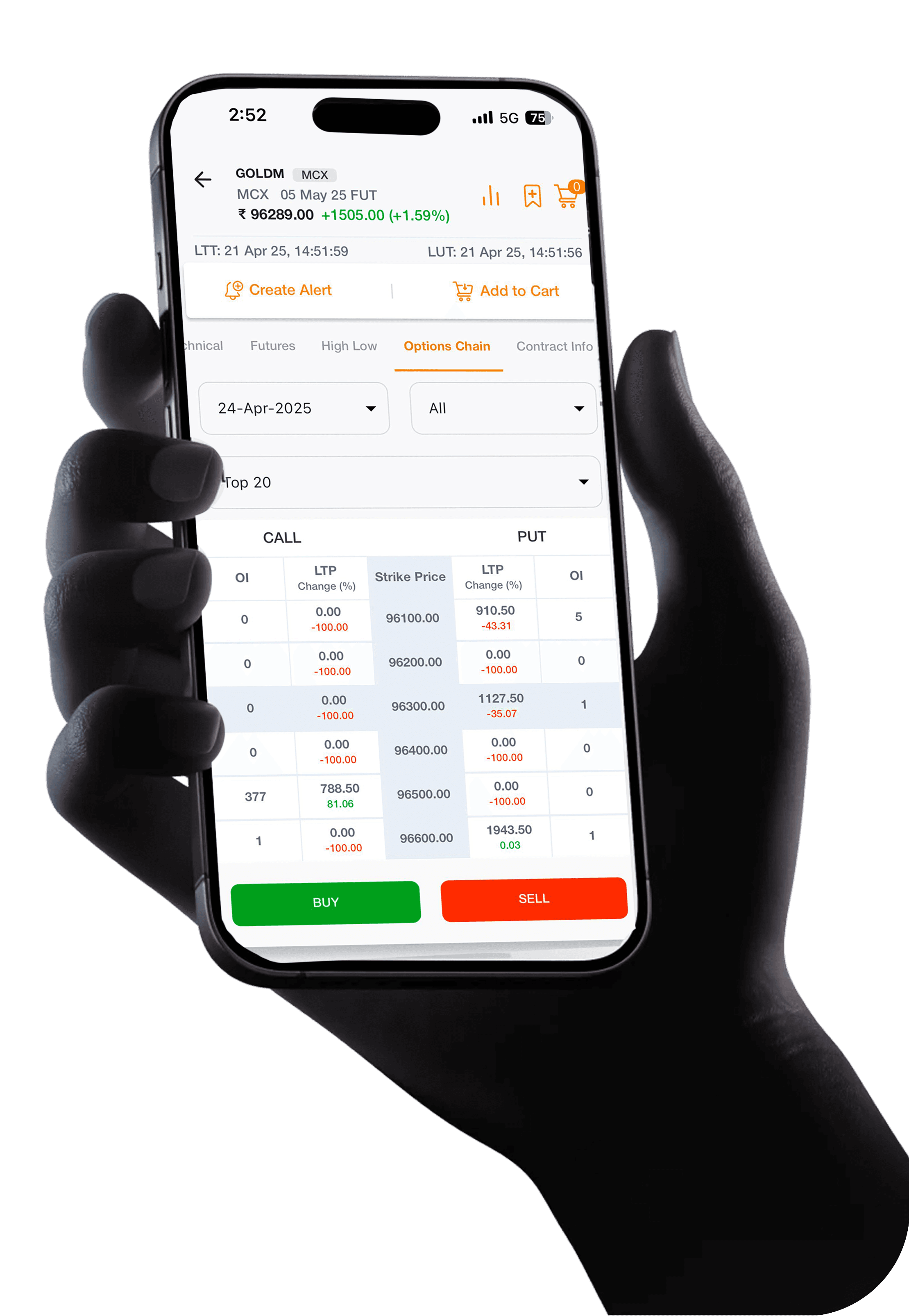
The derivatives market trades contracts whose value is derived from an underlying asset, which could be a stock, index, commodity, currency, or interest rate.
The two most common types of derivatives are:
- Futures: Futures are financial contracts in which two parties agree to buy or sell an asset at a fixed price on a specified future date. These contracts are commonly used for hedging risks or speculating on price movements.
- Options: Contracts that give the buyer the right (but not the obligation) to buy or sell an asset at a set price before a certain date
Derivatives are primarily used for two purposes:
- Hedging: to protect an existing position from adverse price movements
- Speculation: to profit from anticipated price movements
The derivatives market is complex and carries significant risk. It is generally more suited to experienced traders and institutional investors. Retail investors should approach it with caution and a thorough understanding of the instruments involved.
Disclaimer: Derivatives trading involves substantial risk of loss and may not be suitable for all investors. Please consult a SEBI-registered financial advisor before trading in derivatives.
6. Foreign Exchange Market (Forex):
The foreign exchange market, or forex, is where currencies are traded. It is the largest and most liquid financial market in the world.
While not a "stock market" in the traditional sense, forex is a critical part of the broader financial markets ecosystem. Currency pairs like USD/INR, EUR/USD, or GBP/JPY are traded here.
Forex markets operate 24 hours a day, five days a week, across time zones. In India, currency derivatives are traded on exchanges like NSE and BSE under the regulatory purview of SEBI and RBI.
7. Commodity Market:
Commodity markets deal in raw materials and primary goods, both physical (spot market) and through derivative contracts.
Broadly classified into:
- Hard commodities: Gold, silver, crude oil, natural gas
- Soft commodities: Agricultural products like wheat, cotton, sugar, coffee
In India, commodities are traded on national exchanges, including the National Stock Exchange (NSE), the Bombay Stock Exchange (BSE), and specialized platforms like the Multi Commodity Exchange (MCX) and the National Commodity and Derivatives Exchange (NCDEX).
8. Over-the-Counter (OTC) Market:
Unlike formal exchanges (like NSE or NYSE), the OTC market has no centralized location. Trading happens directly between two parties, usually through a network of dealers, without going through an exchange.
Many smaller companies that don't meet the listing requirements of major exchanges trade OTC. Some bonds and derivatives are also traded over the counter.
Key features:
- Less regulated than exchange-traded markets
- Higher counterparty risk
- Less price transparency
- Often used for customized financial contracts
9. Bull Market vs. Bear Market (Market Phases):
While not separate "types" of markets in a structural sense, understanding these phases is essential for any investor.
- Bull Market: A period of rising stock prices, typically by 20% or more from recent lows. Investor confidence is high, and the economy is usually expanding.
- Bear Market: A period of falling stock prices, typically declining 20% or more from recent highs. Often accompanied by economic slowdown or recession fears.
Knowing which phase the market is in can significantly influence your investment strategy and asset allocation decisions.
How Does Share Market Investment Fit Into All of This?
When most people talk about share market investment, they're typically referring to equity investments in the secondary market, buying and selling shares of listed companies on recognized exchanges.
A well-rounded investment approach, however, often involves exposure across multiple types of markets - equities for growth, debt for stability, gold or commodities as a hedge, and sometimes derivatives for sophisticated risk management.
The right mix depends entirely on your:
- Financial goals (wealth creation, income, capital preservation)
- Investment horizon (short-term, medium-term, long-term)
- Risk tolerance (conservative, moderate, aggressive)
Importance of Stock Markets
Stock markets are essential for both businesses and investors.
1. For Companies:
- Raise capital for expansion
- Improve brand visibility
- Access public funding
2. For Investors:
- Wealth creation opportunities
- Liquidity
- Dividend income
- Portfolio diversification
3. For the Economy:
- Encourages savings and investment
- Supports economic growth
- Improves capital allocation
Things to Consider Before Investing in the Stock Market
Before making any share market investment, investors should evaluate several factors.
1. Risk Tolerance: Stock markets can be volatile. Investors should understand their ability to handle market fluctuations.
2. Investment Goals: Short-term and long-term goals influence investment decisions and asset allocation.
3. Market Knowledge: Understanding financial statements, valuation, and market trends can help investors make informed choices.
4. Diversification: Spreading investments across sectors and asset classes may help reduce risk.
5. Investment Horizon: Longer investment horizons may help manage short-term volatility more effectively.
Common Misconceptions About the Stock Market
“The stock market is only for experts.”
Modern investment platforms and educational resources have made investing more accessible for beginners.
“Investing is the same as gambling.”
Investing involves research, analysis, and long-term planning, unlike speculation based purely on chance.
“You need large amounts of money to start.”
Many platforms now allow investors to begin with relatively small investment amounts.