Stock Exchanges Stocks
Stock exchanges form the foundation of the capital markets by providing a regulated platform where investors can buy and sell securities. They facilitate price discovery, improve market liquidity, and help companies raise capital for growth and expansion.
Stock Exchanges Sector Stocks List 2026
220 Stocks| Company | LTP | Market Cap | Volume | 52 Week Low | 52 Week High |
|---|---|---|---|---|---|
| Nifty Total Market | 13,269.05 | ₹4.52 CR | - | 11,436.55 | 13,548 |
| Nifty 500 | 23,482 | ₹4.30 CR | - | 20,385.65 | 24,144.2 |
| Nifty 500 Multicap 50:25:25 | 16,695.7 | ₹4.30 CR | - | 14,102.2 | 16,847.15 |
| BSE 500 | 36,700.18 | ₹4.26 CR | - | 31,965.51 | 37,874.46 |
| Nifty LargeMidcap 250 | 16,863.45 | ₹3.77 CR | - | 14,445.65 | 17,077.75 |
| BSE 250 LargeMidCap Index | 10,840.73 | ₹3.76 CR | - | 9,557.65 | 11,319.13 |
| BSE 200 | 11,354.57 | ₹3.54 CR | - | 10,077.77 | 11,944.41 |
| BSE Dollex 200 | 1,978.39 | ₹3.54 CR | - | 1,784.68 | 2,224.62 |
| Nifty 200 | 14,065.8 | ₹3.47 CR | - | 12,396.1 | 14,700.95 |
| BSE 100 LargeCap TMC Index | 9,110.36 | ₹2.77 CR | - | 8,212.16 | 9,738.1 |
| Nifty 100 | 25,281.6 | ₹2.73 CR | - | 22,720.45 | 26,975.15 |
| Nifty 100 Equal Weight | 35,158.95 | ₹2.73 CR | - | 29,575.35 | 35,705.95 |
| BSE 100 | 25,818.24 | ₹2.57 CR | - | 23,249.92 | 27,621.72 |
| BSE 100 ESG Index (INR) | 410.06 | ₹2.49 CR | - | 370.38 | 440.83 |
| Nifty100 ESG | 5,030.35 | ₹2.29 CR | - | 4,421.6 | 5,269.85 |
| Nifty 50 | 24,090.85 | ₹1.96 CR | - | 22,182.55 | 26,373.2 |
| Nifty 50 Equal Weight | 32,984.4 | ₹1.96 CR | - | 29,299.65 | 33,970.65 |
| BSE SENSEX 50 | 25,270.53 | ₹1.93 CR | - | 23,185.03 | 27,541.52 |
| BSE Dividend Stability Index | 1,025.17 | ₹1.91 CR | - | 951 | 1,095.64 |
| Nifty Dividend Opportunities 50 | 5,832.65 | ₹1.81 CR | - | 5,614 | 6,584.65 |
| Nifty50 Dividend Points | 189.56 | ₹1.81 CR | - | 5.53 | 279.19 |
| Nifty MidSmallcap 400 | 21,664.9 | ₹1.57 CR | - | 17,390.85 | 21,753.4 |
| BSE Sensex | 76,933.59 | ₹1.54 CR | - | 71,545.81 | 86,159.02 |
| BSE 400 MidSmallCap Index | 12,930.7 | ₹1.49 CR | - | 10,400.68 | 13,000.94 |
| Nifty 100 Low Volatility 30 | 20,158.25 | ₹1.38 CR | - | 18,084.1 | 21,441.3 |
| BSE Low Volatility Index | 1,755.27 | ₹1.24 CR | - | 1,623.09 | 1,917.3 |
| BSE Financial Services | 12,417.92 | ₹1.14 CR | - | 10,959.13 | 13,392.39 |
| Nifty India Manufacturing | 16,558.8 | ₹1.12 CR | - | 13,805 | 16,701.8 |
| Nifty Services Sector | 30,750.1 | ₹1.12 CR | - | 28,232.65 | 34,549.75 |
| Nifty Alpha Low-Volatility 30 | 27,117.95 | ₹1.07 CR | - | 23,557.95 | 27,808.7 |
What are Stock Exchanges?
Stock exchanges are organized marketplaces where securities such as stocks, bonds, exchange-traded funds (ETFs), and derivatives are traded. They provide the infrastructure, technology, and regulatory framework required for smooth and transparent transactions between buyers and sellers.
Companies associated with stock exchanges may include exchange operators, clearing corporations, depositories, and other market infrastructure institutions that support the trading and settlement process.
These businesses generate revenue from activities such as transaction fees, listing charges, clearing and settlement services, market data subscriptions, and technology solutions.
Since stock exchanges serve as a key pillar of the financial system, stocks linked to this segment are often considered an important part of the broader financial services sector.
Things to Consider Before Investing in the Stocks Listed on Stock Exchanges
Before investing in stocks associated with stock exchanges, investors should understand the factors that can influence their performance:
1. Trading Volumes:
Higher trading activity generally leads to increased revenues for exchange-related businesses. Market participation by retail and institutional investors can significantly impact earnings.2. Capital Market Growth:
The number of listed companies, IPO activity, and growth in investor accounts can influence the long-term prospects of stock exchange-related businesses.3. Regulatory Environment:
Stock exchanges operate under strict regulatory oversight. Changes in regulations, compliance requirements, or market structure can affect profitability and operations.4. Technological Capabilities:
Modern trading platforms require robust technology infrastructure. Companies that continuously invest in technology and cybersecurity are often better positioned to maintain competitive advantages.5. Diversification of Revenue Sources:
Businesses that generate revenue from multiple services such as derivatives trading, clearing services, data analytics, and depository operations may be more resilient during periods of lower market activity.6. Financial Performance:
Investors should assess revenue growth, operating margins, cash flows, return ratios, and overall business scalability before investing.6. Government Policies and Maritime Initiatives:
Policies supporting domestic shipbuilding, port development, coastal shipping, and naval modernization can create long-term growth opportunities for companies in the sector.
What are the Benefits of Investing in Stocks Listed on Stock Exchanges?
Stocks associated with stock exchanges can offer several advantages to investors:
1. Exposure to Capital Market Growth:
As investor participation increases and financial markets expand, exchange-related businesses can benefit from rising transaction volumes and market activity.2. Strong Competitive Position:
Stock exchanges often enjoy strong market positions due to regulatory approvals, established infrastructure, and network effects that can be difficult for competitors to replicate.3. Multiple Revenue Streams:
Many exchange-related companies earn revenue from trading, listings, clearing, settlement, market data, and technology services, providing diversified income sources.4. Increasing Financialization of Savings:
As more households shift savings from traditional assets to financial products, stock exchanges may benefit from greater market participation and investment activity.5. Scalability:
Technology-driven exchange businesses can often handle higher transaction volumes without a proportional increase in costs, potentially supporting profitability growth over time.
What are the Different Types of Stock Exchanges?
The stock exchange ecosystem consists of several types of market infrastructure institutions and exchanges:
- 1. Equity Exchanges: These platforms facilitate the trading of listed company shares and are the most widely recognized type of stock exchange.
- 2. Derivatives Exchanges: These exchanges provide trading platforms for futures and options contracts based on stocks, indices, commodities, currencies, and other underlying assets.
- 3. Commodity Exchanges: Commodity exchanges enable the trading of agricultural products, metals, energy products, and other commodities through derivative contracts.
- 4. Currency Exchanges: These platforms facilitate trading in currency derivatives and help market participants manage foreign exchange risks.
- 5. Clearing and Settlement Institutions: These organizations ensure that trades are successfully settled and help reduce counterparty risk in financial markets.
- 6. Depository Services Providers: Depositories hold securities in electronic form and facilitate seamless transfer and settlement of shares between investors.
Who Can Invest in Stock Exchanges?
Stocks associated with stock exchanges are accessible to a broad range of investors, including:
- →Retail investors seeking exposure to India's growing capital markets
- →Long-term investors interested in financial infrastructure businesses
- →Institutional investors such as mutual funds, pension funds, and insurance companies
- →High-net-worth individuals (HNIs) looking for opportunities within the financial services sector
- →Investors seeking businesses that may benefit from increasing market participation and financialisation trends
How To Invest in Stocks Listed on Stock Exchanges with Anand Rathi?
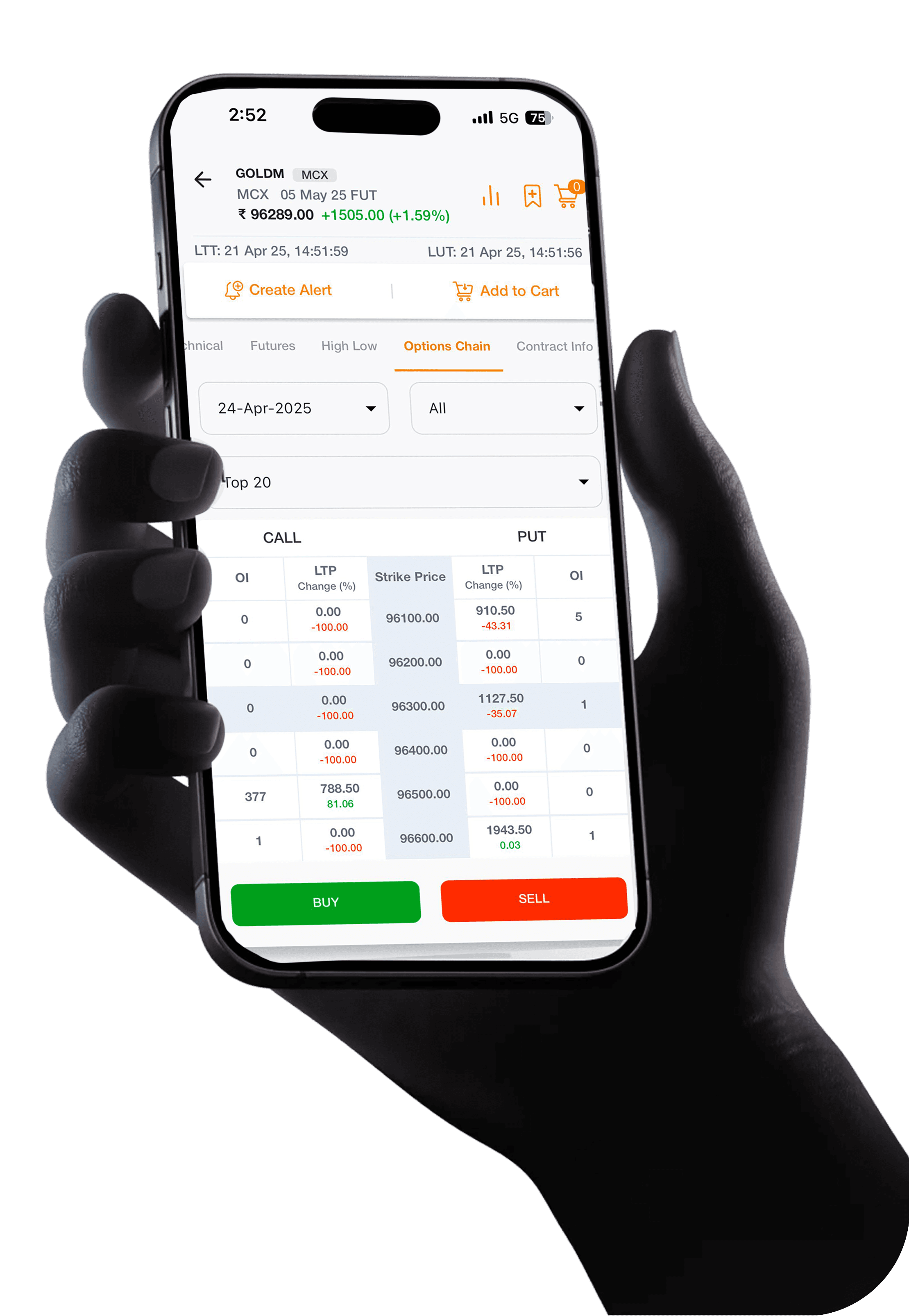
Investing in shipping sector stocks through Anand Rathi’s TradeMobi app involves a few simple steps:
1. Open a Trading and Demat Account:
You need to register yourself with Anand Rathi and open a demat/trading account to start investing in stocks.2. Add Funds to Your Account:
You'll be required to transfer money from your bank account to your trading account via net banking or UPI.3. Research Listed Stocks:
Login to the TradeMobi app, search for the companies associated with stock exchanges, and select the stock you are interested in investing in.4. Place Your Order:
You may enter the number of shares you want to invest in and place your order to buy the stocks at either the current price or a predetermined price.5. Track and Manage Your Investments:
Once you have invested in your shares, you can track your investments and keep a tab on the performance of your stocks as well as the market trend.
Explore Other Popular Sectors
Disclaimer
The information provided on this page is for informational purposes only and should not be construed as investment advice, recommendation, or solicitation to buy or sell any securities or financial pr...
Frequently Asked Questions
- Trading volumes and investor participation
- IPO and fundraising activity
- Market volatility
- Regulatory developments
- Economic growth
- Technological innovation
- Growth in demat accounts and retail investing
- Dependence on market trading activity
- Regulatory and compliance changes
- Competition from alternative trading platforms
- Technology and cybersecurity risks
- Market downturns affecting investor participation
- Changes in transaction fee structures
Download TradeMobi App
- Real-Time Market Data
- Advanced Trading Tools
- Expert-Backed Research