Introduction
In the past month, the Indian stock market has seen the Nifty slipping badly, and honestly, investors are concerned about it.
On March 1st week, what started as a mild dip started to feel like a full-blown bloodbath, leaving investors anxious, confused, and constantly refreshing their app screen.
And if you're someone who checked your portfolio recently, don't worry, you're not alone.
Stay tuned;
Because, in this blog, we'll break down why the Nifty is falling. Is it just a market crash, or is it more than that? And also what it actually means for you as an investor.
Why Is the Nifty Falling in 2026? Top 5 Reasons Explained
If the Nifty 50 has been falling lately, it's not because of one single trigger. It's usually a mix of global pressure, domestic cues, and investor behavior coming together.
Let us understand the reasons for Nifty fall in 2026:
Reason #5 - Rising Crude Oil Prices and US-Iran War
Tensions in the Middle East, especially around a potential US-Iran conflict, have pushed crude prices upward in recent weeks.
Why it matters:
Since India imports over 80% of its crude oil, which makes the economy highly sensitive to global oil prices. Higher crude prices leads to inflation, fiscal pressure, and currency weakness. As a result, the crude oil price impact on the stock market has also grown.
Impact on Nifty:
- Higher oil → Inflation triggers → rate concerns
- Sectors like paint, aviation, and FMCG come under pressure
This creates broad market nervousness, contributing to the recent dip in the Nifty and Sensex indices.
Reason #4 - FII selling impact on the stock market
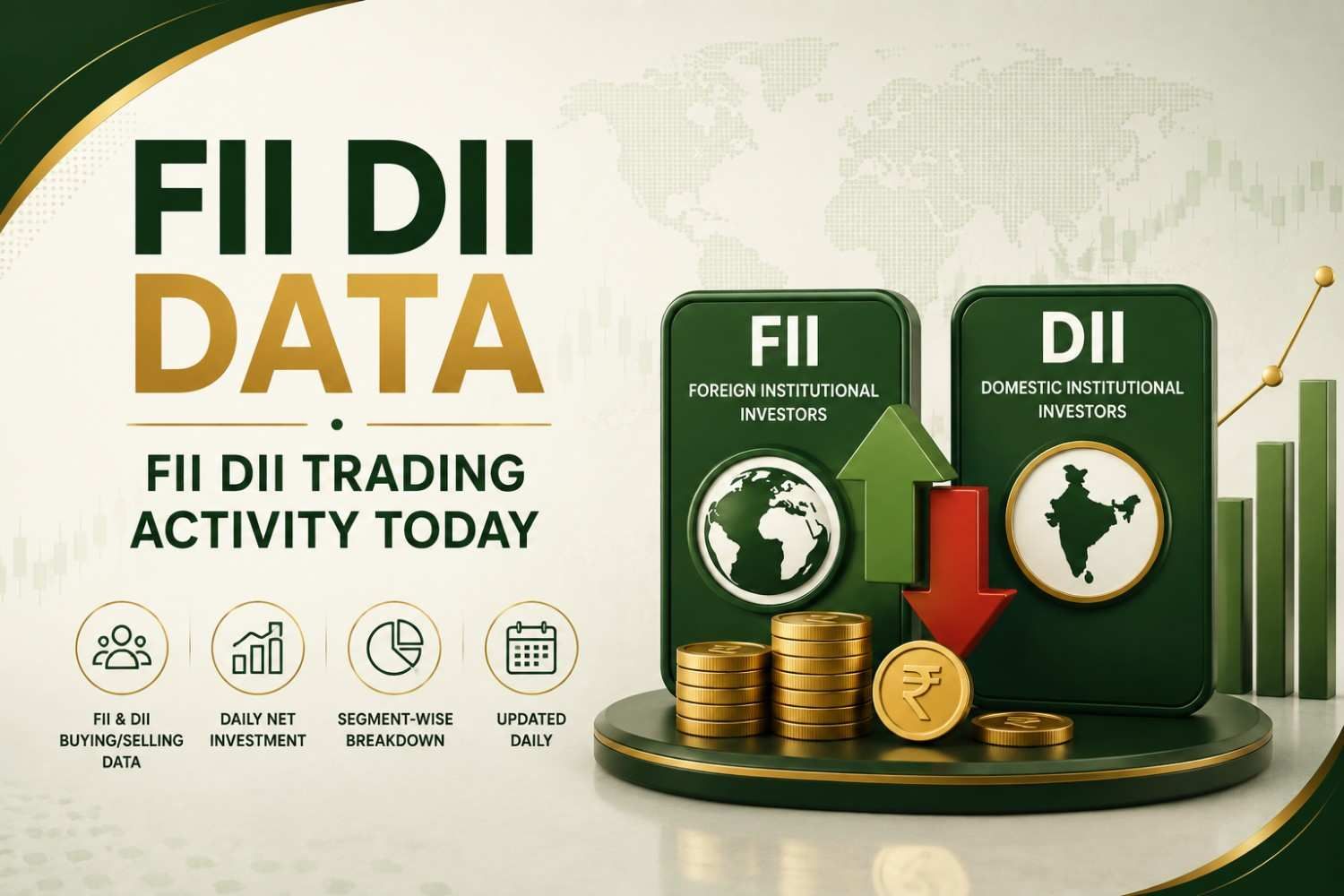
Right now, one of the biggest pressures for Indian stock markets is foreign money moving out of India.
Why, because:
- US bond yields are still attractive for them
- The dollar remains relatively strong
- Global investors are choosing safer returns over emerging market risk
Impact on Nifty: So even if India is fundamentally strong, FIIs are booking their profits and exiting, pulling the Nifty index down. Also, the guard created by DIIs (or Domestic Investors) couldn't handle the sell-off pressure.
Reason #3 - "No Fresh Positive Trigger" in the Market
Markets don't just react to the news; they also need strong positive triggers to keep moving higher. In the absence of new catalysts, momentum naturally slows down.
And that's what is happening to the Nifty and Sensex indices as well.
Impact on Nifty:
- Buying interest weakens at higher levels
- Markets struggle to sustain rallies
- Gradual drift or sideways movement with a negative bias
Reason #2 - Banking & Financial Stocks Under Pressure
Banks have a heavy weightage (~20%) in the Nifty 50 index.
Currently:
- Margin pressures due to interest rates
- Slightly cautious outlook on credit growth
- Profit booking in large banks
Impact on Nifty: So when banking stocks fall, the entire index feels heavy, further falling the Nifty.
Reason #1 - Valuations Were Getting Stretched
Before the fall, Indian markets were trading at a premium compared to global peers.
So naturally:
- Investors started questioning high valuations
- Markets began adjusting expectations
Impact on Nifty: That's when this correction dragged the index down, but it is often referred to as the market’s way of resetting to more sustainable levels.
What Happens If the Nifty Keeps Falling? Key Market Impacts
If the Nifty fall continues in 2026, it may slowly start showing up in the real economy and everyday decisions.
Here's what may typically follow:
- Portfolio erosion- People will see the alpha value of their portfolio erode, and eventually reduce their spending habits.
- Delays in IPO Plans & CapEx – Companies may pause expansion and postpone IPOs as valuations drop and fundraising becomes less attractive.
- Corporate Sentiment Weakens – Businesses turn cautious, delaying hiring and investments, which can slow overall economic momentum.
- Central Bank Intervention – If the fall reflects deeper stress, the Reserve Bank of India may step in with liquidity support or policy signals to stabilize sentiment.
- Impact on Bank Nifty – Banking stocks, being highly sensitive, may fall faster, dragging broader or associated indices down further.
- Banking & Credit Cycle Impact – Banks may tighten lending, leading to slower credit growth and reduced business activity.
What to Expect Next in the Market: Key Factors Investors Should Watch
After a phase of fall in the Nifty in 2026, the big question is: what happens next?
The truth is also that no one can predict the next move or when markets will recover. But, definitely, there would be signals or triggers that indicate whether the fall will continue or stabilize.
Here's what investors should keep a close eye on:
1. Middle-East Tensions
Escalating geopolitical war risks (especially in the Middle East) can directly impact global risk sentiment and crude oil prices.
It means,
Higher uncertainty can cause higher volatility in the Nifty index.
2. Corporate Commentary (Forward Guidance)
More than results, management outlook on demand, margins, and capex will shape market expectations.
Weak guidance can extend market pressure even if current results are stable.
3. Market Is In A "Valuation Reset" Phase
The index isn't collapsing; it's adjusting expectations to its actual valuation.
During this time, there could be intermittent falls or short pullbacks (during monthly F&O expiry).
4. Liquidity Dominance
Right now, price action is being driven more by (FII flows, global events, and war), not earnings. Even good news may not push markets up immediately if liquidity is tight.
5. Shift Towards Fixed-Income Options
Considering the current war situation, where interest rates are high, and equity looks uncertain, investors may try to protect their capital.
As a result, capital may shift temporarily to debt. However, equity markets may still stay under pressure until yields soften.
Final Thoughts: How Long Will Nifty Fall Continue?
This question every investor is asking right now, and honestly, there is no fixed timeline that the market works on.
But here's a more practical way to think about it:
The fall will likely continue as long as uncertainty dominates liquidity and sentiment. But what matters is patience, clarity on the situation, discipline, and making the right investment decision considering the bird's-eye view.
To get more clarity, don't forget to consult a professional for more guidance.